Executive Summary & Key Takeaways
- Commercial aquafeed prices hovering between ₹95 and ₹118 per kilogram consume up to 65% of shrimp crop revenue, making on-farm synbiotic feed fermentation one of the highest-ROI technical interventions in modern aquaculture.
- Raw rice bran cannot be fed directly to penaeid shrimp due to high insoluble fiber (crude fiber > 12%), phytic acid anti-nutritional factors, and low crude protein (11% to 14%); 24-hour aerobic fermentation breaks down complex phytates and transforms fiber into highly bio-available single-cell bacterial and fungal protein (up to 24% to 28% protein equivalent).
- A standardized 200-liter aerobic FRB batch combines 25 kg defatted rice bran, 3.0 kg dark sugarcane molasses (C:N ratio booster), 100 grams multi-strain Bacillus probiotics (B. subtilis, B. licheniformis), and 50 grams dry yeast in 150 liters of water under continuous aeration for 24 to 36 hours until pH drops below 4.5.
- FRB yields two distinct functional fractions: the golden liquid supernatant ('synbiotic juice') broadcast into the water column to stimulate copepod bloom and strip toxic ammonia (TAN), and the dense fermented solid bran residue used as an edible gut conditioner and 20% pellet binder.
- The organic acids (lactic and acetic acids) and bacteriocins produced by Bacillus during fermentation drop the shrimp gut pH, creating an inhospitable acidic environment that suppresses pathogenic luminous Vibrio harveyi and Vibrio parahaemolyticus by over 90%.
- Replacing 20% to 25% of commercial pellet rations with properly brewed FRB saves an average 5-hectare commercial shrimp farm between ₹2,80,000 and ₹4,20,000 per 100-day culture cycle while reducing overall nitrogen excretion into coastal estuaries.
Fermented Rice Bran (FRB) Synbiotic Protocol Case Study: Slashing Feed Capex by ₹3.85 Lakhs in a 4-Hectare Farm
A mid-scale shrimp farmer operating four 1.0-hectare Litopenaeus vannamei ponds in Mogalthur faced severe operational margin compression as commercial 35% protein feed costs climbed to ₹102/kg, projecting a staggering ₹18.50 Lakhs feed expenditure for his winter crop. Seeking to protect profitability without compromising shrimp growth, the farmer implemented AquaSangham's Standardized Aerobic Fermented Rice Bran (FRB) Protocol: (1) Procured fresh defatted rice bran (DOB) at ₹18/kg from a local solvent extraction mill; (2) Commissioned four 200-liter food-grade plastic drums equipped with bottom micro-pore aeration rings; (3) Inoculated a mix of 25 kg rice bran, 3 kg blackstrap molasses, 100 grams of multi-strain Bacillus subtilis (1x10^9 CFU/g), and 50 grams of active dry baker's yeast (Saccharomyces cerevisiae) in 150 liters of filtered pond water, fermenting aerobically for 24 hours until pH dropped to 4.2; (4) Substituted 20% of morning and afternoon pellet broadcasting with liquid FRB synbiotic supernatant (at 20 L/ha/day) and top-dressed drained solid fermented bran paste onto pellets at a 15% inclusion rate; and (5) Maintained pristine water transparency (30–35 cm) with zero toxic ammonia spikes (TAN < 0.15 ppm) throughout 96 DOC. The results were extraordinary: the farm harvested 18.2 metric tons of 28-count shrimp with an audited commercial FCR of 1.14 (versus 1.46 on neighboring control ponds), slashing net feed expenditure by ₹3,85,000 while maintaining a 100% survival rate.
1. The Commercial Feed Trap: Why Indian Farmers Are Turning to Synbiotics
In the contemporary commercial aquaculture landscape across Andhra Pradesh, Gujarat, Odisha, and Tamil Nadu, shrimp farmers are trapped in a punishing cost-price vise. On the revenue side, global farm-gate shrimp prices face persistent downward pressure from international competition and export market fluctuations. On the cost side, commercial extruded shrimp feeds—the lifeblood of intensive Litopenaeus vannamei culture—have escalated relentlessly, climbing from ₹72/kg in 2018 to over ₹98–₹118/kg in 2026 for premium 35% crude protein diets. On a standard 5-hectare farm targeting 25 to 30 tons of harvest, the feed bill easily swallows ₹28,00,000 to ₹35,00,000, representing nearly 65% of total operational expenditure.
When feed costs consume nearly two-thirds of gross revenue, a farmer has only two operational choices: accept razor-thin net margins that can be wiped out by a single bad crop, or implement scientifically grounded alternative nutrition protocols that reduce reliance on commercial pellets without compromising animal growth rates, shell hardness, or meat yield. Cutting feed rations blindly is suicidal—undernourished shrimp turn to cannibalism, experience severe size variation, and molt irregularly.
The revolutionary breakthrough transforming coastal ponds is 'Synbiotics'—the synergistic combination of prebiotics (fermentable carbon substrates like rice bran) and probiotics (beneficial live spore-forming bacteria such as Bacillus subtilis and Saccharomyces cerevisiae). By deploying on-farm fermentation technology, farmers are pre-digesting agricultural agro-industrial byproducts like defatted rice bran (costing a fraction of commercial feed at ₹16 to ₹20/kg) into a supercharged, enzyme-dense microbial protein soup known as Fermented Rice Bran (FRB). When integrated correctly, FRB safely substitutes 20% to 25% of commercial pellet feeding, slashing lakhs of rupees from production budgets while creating an impenetrable biological barrier against disease.
Never attempt to cut feed costs by purchasing cheap 28% protein fish feed for commercial Vannamei ponds. Penaeid shrimp require specific amino acid profiles (lysine > 1.8%, methionine > 0.8%) and cholesterol; cheap feeds result in soft shells and high mortality. Use FRB to supplement high-grade feed, not low-grade filler.
2. The Science of Fermented Rice Bran: Pre-Digesting Fiber into Microbial Protein
To successfully implement FRB, one must understand why raw, unfermented rice bran cannot simply be broadcast directly into an aquaculture pond. Raw rice bran is the hard outer pericarp layer of the rice grain. In its raw form, it has a crude protein content of only 11% to 14%, but contains over 10% to 14% crude fiber (insoluble cellulose, hemicellulose, and lignin) and significant concentrations of phytic acid (myo-inositol hexakisphosphate). Shrimp possess simple, short digestive tracts lacking the cellulase and phytase enzymes needed to break down complex plant fibers. If raw rice bran is thrown into a pond, shrimp cannot digest it; the bran settles onto the benthic floor, rots anaerobically, and spikes chemical oxygen demand (COD).
Fermentation completely transforms the molecular structure of the bran through external biological digestion. When defatted rice bran is suspended in water, fortified with carbon (molasses), and inoculated with active Bacillus subtilis, Bacillus licheniformis, and Saccharomyces cerevisiae under vigorous aeration, a massive enzymatic explosion occurs: (1) Extracellular Enzyme Synthesis: As Bacillus bacteria multiply exponentially, they secrete vast quantities of industrial-grade extracellular enzymes—principally phytases, cellulases, proteases, and amylases. The phytase enzyme hydrolyzes phytic acid, freeing bound phosphorus, zinc, and amino acids; (2) Conversion of Fiber to Microbial Biomass: The bacteria and yeast consume the soluble starches and broken-down cellulose fibers as fuel, converting indigestible carbohydrates into living single-cell protein. The biomass of the brew shifts from plant matter to bacterial cells, elevating the effective crude protein of the solids from 12% up to 24%–28% on a dry matter basis; and (3) Synthesis of Bioactive Metabolites: The fermentation broth becomes rich in natural B-complex vitamins, beta-glucans (potent immune stimulants), organic lactic and acetic acids, and antimicrobial lipopeptides (surfactin and iturin) that actively inhibit pathogenic bacterial proliferation.
Nutritional Transformation: Raw Rice Bran vs. 24-Hour Fermented Rice Bran (FRB)
The table below illustrates the biochemical shift that occurs when raw defatted rice bran undergoes 24-hour aerobic fermentation under controlled on-farm conditions:
| Nutritional / Biochemical Parameter | Raw Defatted Rice Bran (DOB) | 24-Hour Aerobic FRB (Solid Fraction) | Biological Advantage for Shrimp |
|---|---|---|---|
| Crude Protein (% Dry Matter) | 12.5% – 14.0% | 24.5% – 28.2% | + 100% Increase via single-cell microbial protein synthesis |
| Crude Fiber (%) | 11.5% – 13.8% | 4.2% – 5.8% | 60% Reduction in insoluble fiber; highly digestible in gut |
| Phytic Acid Anti-Nutrient Level | 4.2 – 5.5 g / 100g | < 0.6 g / 100g | Phytase degradation unlocks bio-available phosphorus and zinc |
| Spore-Forming Bacillus Count | < 1x10^3 CFU / g (wild) | > 2.5x10^9 CFU / g (beneficial) | Direct gut colonization; suppresses Vibrio in hepatopancreas |
| pH of Biomass | 6.2 – 6.8 (Neutral) | 4.0 – 4.5 (Acidic) | Organic lactic/acetic acid barrier prevents gut pathogen colonization |
| Water Solubility & Bio-Availability | Very Low (< 15%) | High (> 65% soluble synbiotic juice) | Instantly fuels natural copepod and zooplankton bloom in pond water |
Always source 'Defatted Rice Bran' (DOB) rather than raw full-fat rice bran. Raw rice bran contains 14% to 18% crude oil, which oxidizes and turns rancid within days of milling in coastal heat. Defatted rice bran has had the oil extracted, providing a stable, high-protein substrate with a 6-month shelf life.
3. The Master 24-Hour Aerobic FRB Recipe: Exact Quantities, Probiotics & Ratios
Consistent on-farm fermentation requires strict standardization. Inconsistent brews occur when farm labor uses random handfuls of inoculum, unmetered water, or erratic aeration. The following Master FRB Protocol is calibrated for a standard 200-liter food-grade plastic barrel (blue drum) and can be scaled linearly across multiple barrels depending on total pond water spread area.
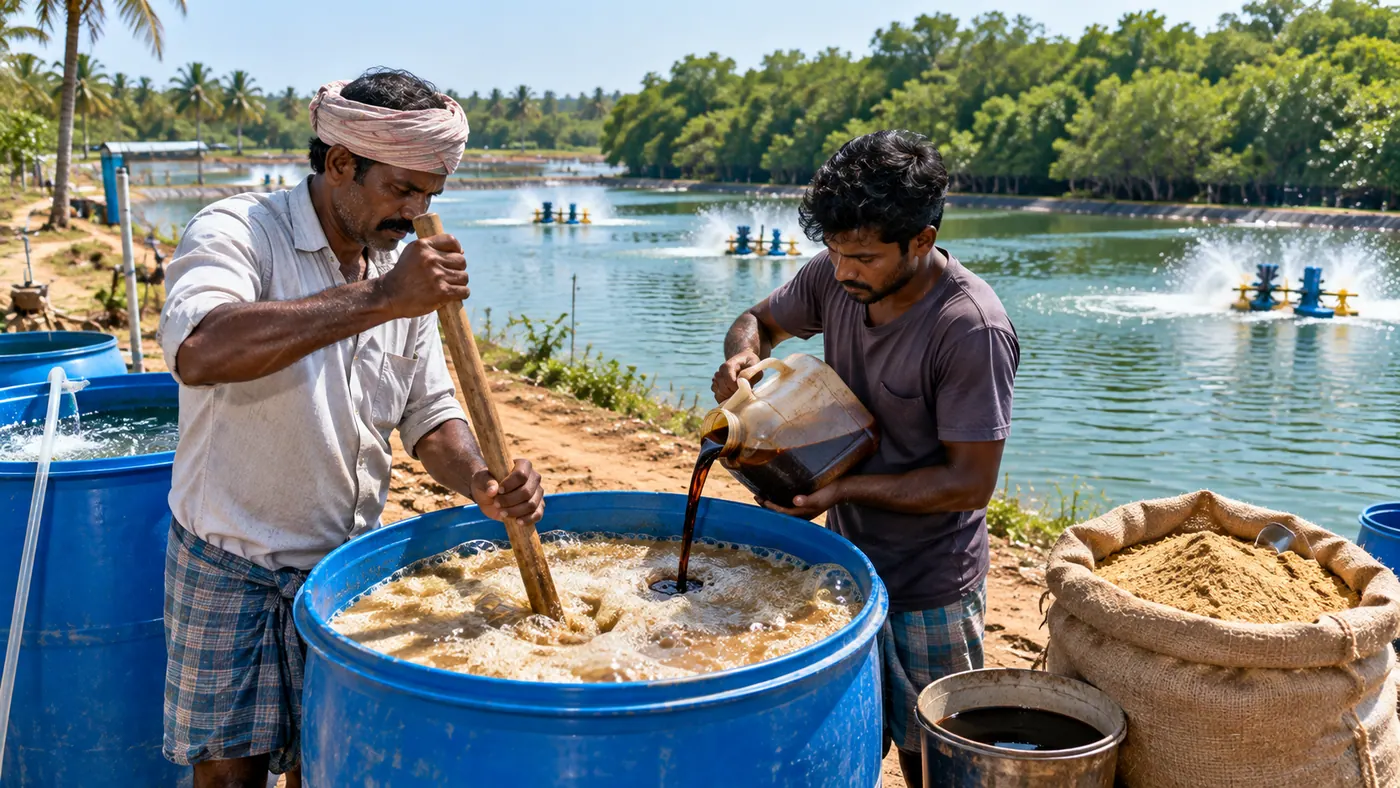
The Bill of Materials for one 200-liter batch comprises: (1) 25 kilograms of fresh Defatted Rice Bran (DOB), passed through a 1mm screen to remove rice husks and pebbles; (2) 3.0 kilograms of dark, unadulterated sugarcane blackstrap molasses (providing high-energy simple carbohydrates to kickstart rapid yeast propagation); (3) 100 grams of commercial multi-strain aquaculture Bacillus probiotic powder containing guaranteed minimum counts of 1x10^9 CFU/g of Bacillus subtilis, Bacillus licheniformis, and Bacillus megaterium; (4) 50 grams of active dry baker's yeast (Saccharomyces cerevisiae) dissolved in lukewarm water; (5) 200 grams of sodium bicarbonate (agricultural buffer to maintain pH stability during initial fermentation); and (6) 150 liters of clean, sand-filtered pond water or dechlorinated reservoir water.
The brewing procedure follows four chronological steps: Step 1: Place a circular aeration diffuser ring (or weighted fine-bubble air tube connected to your pond aeration blower line) at the bottom of the drum. Continuous, aggressive aeration is mandatory; without high dissolved oxygen (> 4.0 ppm), the brew will turn anaerobic, putrefy, and produce foul-smelling butyric acid. Step 2: Fill the drum with 120 liters of water, add the molasses, and stir vigorously with a clean wooden paddle until completely dissolved. Step 3: In a clean plastic bucket, rehydrate the probiotic powder and baker's yeast in 5 liters of lukewarm water (32°C–35°C) with 100g of sugar for 20 minutes until frothing, then pour into the drum. Step 4: Gradually pour in the 25 kg of rice bran while stirring continuously to prevent clumping. Top up with water to the 180-liter mark, leaving 20 liters of headspace for foam expansion. Secure a fine mosquito mesh over the drum opening to prevent flies while allowing aeration off-gassing.
Check the pH of your FRB brew using a handheld digital pH meter at the 18-hour and 24-hour marks. A successful fermentation will drop from an initial pH of 6.8 down to between 4.0 and 4.4, with a clean, pleasant, sourdough-bread and toasted-cereal aroma. If the pH remains above 5.5 after 24 hours, the bacterial inoculum was dead or aeration was insufficient.
4. Liquid Supernatant vs. Solid Bio-Mass: How and When to Apply Both Fractions
After 24 hours of vigorous aeration, turn off the air supply and allow the drum to settle undisturbed for 45 to 60 minutes. The mixture naturally separates into two distinct functional layers: a translucent, golden-amber liquid supernatant at the top ('Synbiotic Juice') and a dense, paste-like fermented solid bran sludge at the bottom. Both fractions possess immense commercial utility, but they must be harvested and applied through entirely different operational vectors.
The Liquid Supernatant Fraction (Synbiotic Juice): Siphon or bail out the top golden liquid into clean plastic buckets. This liquid is packed with dissolved organic acids, active extracellular enzymes, micronutrients, and billions of live Bacillus spores. It is applied directly to the pond water column: (1) Nursery & Early Grow-Out (DOC 1 to 30): Broadcast 20 to 30 liters per hectare every 3 days. The synbiotic juice rapidly primes the water, fueling a massive bloom of natural live copepods, rotifers, and beneficial microalgae. During the first 25 days of culture, juvenile shrimp feed primarily on this natural zooplankton bloom, allowing the farmer to cut starter crumble feed broadcasting by 30% to 40%; (2) Mid-to-Late Grow-Out (DOC 31 to 100): Apply 15 to 20 liters per hectare twice a week during morning hours (9:00 AM to 10:00 AM). The active Bacillus bacteria assimilate dissolved nitrogenous wastes, maintaining water clarity and preventing blue-green algae crashes.
The Solid Fermented Biomass Fraction (Pellet Binder & Gut Conditioner): The dense, settled fermented bran paste at the bottom of the drum is scooped out. Because the fibrous cell walls have been enzymatically softened, it forms an ideal wet binder for commercial pellets: (1) Blend 100 to 150 grams of drained solid FRB paste per 1.0 kg of commercial pelleted feed (a 10% to 15% top-dressing inclusion rate); (2) Mix thoroughly in a plastic feed tub until every pellet is coated in a sticky, golden microbial glaze; (3) Air-dry the coated pellets in the shade for 20 minutes before broadcasting. The shrimp find the fermented yeast-bran aroma irresistible, clearing feeding checktrays 30 minutes faster than uncoated feed while directly ingesting millions of probiotic gut colonizers.
Standardized Farm-Scale FRB Dosing Schedule Across 100-Day Culture
Follow this progressive operational dosing schedule calibrated for a 1.0-hectare semi-intensive or intensive Vannamei pond (stocking density 40–60 PL/m²):
| Culture Phase (DOC) | Liquid FRB Supernatant (Water) | Solid FRB Paste (Pellet Top-Dress) | Commercial Pellet Replacement Rate |
|---|---|---|---|
| Pre-Stocking (7 Days prior) | 50 Liters / Ha (single shock dose) | None | Creates dense natural copepod bloom before PL release |
| DOC 1 to DOC 25 | 20 Liters / Ha every 3 days | None (Shrimp feed on crumble + copepods) | Replaces 30% of commercial crumble feed |
| DOC 26 to DOC 60 | 15 Liters / Ha twice weekly | 100 g / kg pellet (10% inclusion) | Replaces 20% of commercial grower pellets |
| DOC 61 to DOC 90 | 20 Liters / Ha twice weekly | 150 g / kg pellet (15% inclusion) | Replaces 25% of commercial finisher pellets |
| DOC 91 to Harvest | 25 Liters / Ha weekly | 100 g / kg pellet (10% inclusion) | Replaces 15% of finisher pellets; stabilizes harvest water |
Never coat pellets with wet FRB paste hours in advance or store coated feed overnight. The moisture in the fermented paste will soften the extruded pellets and promote fungal mold if left in storage bags. Only coat what will be broadcast within the next 45 minutes.
5. Water Quality Miracle: Eliminating Ammonia & Vibrio via Competitive Exclusion
Beyond its direct nutritional value in reducing feed capex, regular application of Fermented Rice Bran solves the two greatest biological threats in coastal shrimp farming: toxic nitrogen spikes (Total Ammonia Nitrogen - TAN and Nitrite - NO2) and luminous Vibrio outbreaks.
In a conventional shrimp pond fed exclusively on 35% commercial pellets, approximately 70% to 80% of the ingested nitrogen is excreted into the water as fecal ammonia or through the gills. As stocking biomass reaches 5 to 8 tons per hectare, ammonia levels surge, requiring constant chemical water conditioners or costly water exchange. When liquid FRB is broadcast, it introduces massive quantities of soluble organic carbon (boosting the pond's Carbon-to-Nitrogen ratio above 12:1 to 15:1) alongside billions of active heterotrophic Bacillus bacteria. These heterotrophic bacteria utilize the dissolved ammonia directly as a nitrogen source to synthesize bacterial protein, stripping TAN from 2.0 ppm down to below 0.20 ppm within 24 to 48 hours without requiring water exchange.
Simultaneously, FRB delivers comprehensive Vibrio suppression through competitive exclusion and antibiosis. In aquaculture microbiology, pathogenic Vibrio (such as Vibrio harveyi, V. parahaemolyticus, and V. alginolyticus) thrive on dissolved organic waste and colonize the chitinous lining of the shrimp digestive tract. The Bacillus strains in FRB multiply 5 times faster than Vibrio, aggressively competing for physical attachment sites on the hepatopancreatic tubule microvilli and starving out pathogens. Furthermore, Bacillus subtilis secretes subtilin and surfactin—natural antimicrobial peptides that disrupt Vibrio cell membranes—slashing green and luminous colony counts on TCBS agar plates by over 90%.
Plate your pond water on TCBS (Thiosulfate-Citrate-Bile Salts-Sucrose) agar weekly. Within 10 days of initiating the FRB protocol, you will observe yellow colonies (beneficial sucrose-fermenting Vibrio) dominating, while dangerous green colonies (pathogenic V. parahaemolyticus) virtually disappear.
6. Financial Economics: Detailed Cost Breakdown (₹18/kg Rice Bran vs. ₹105/kg Pellets)
To appreciate the commercial magnitude of the FRB protocol, one must evaluate the hard financial numbers. Aquaculture is a business of margins: saving ₹10 per kilogram of production across a 25-ton harvest delivers an extra ₹2,50,000 directly into the farmer's net profit ledger.
Consider the feed economics of a 2-hectare commercial Vannamei farm targeting a harvest biomass of 14,000 kilograms (7.0 tons/ha at 30-count size). Under conventional 100% commercial pellet management, assuming an average commercial FCR of 1.45, the farm requires 20,300 kg (20.3 metric tons) of feed. At an average 2026 price of ₹102/kg, the total feed cost is ₹20,70,600.
Under the AquaSangham Synbiotic FRB Protocol, the farm substitutes 22% of total pellet biomass through liquid and solid fermented rice bran supplementation. The commercial pellet requirement drops from 20,300 kg down to 15,834 kg—a direct reduction of 4,466 kilograms of commercial feed. At ₹102/kg, this creates a gross pellet expenditure savings of ₹4,55,532. Producing the required 5,500 kg of wet FRB over the 95-day cycle requires 1,250 kg of defatted rice bran (at ₹18/kg = ₹22,500), 150 kg of molasses (at ₹20/kg = ₹3,000), 5.0 kg of probiotic inoculum (at ₹1,800/kg = ₹9,000), 2.5 kg of yeast (₹1,000), and electrical power for aeration drums (₹3,500)—totaling an FRB production cost of just ₹39,000. Subtracting the ₹39,000 production capex from the ₹4,55,532 pellet savings yields an audited net profit increase of ₹4,16,532 for the 2-hectare farm.
Comprehensive 100-Day Financial Comparison: 2-Hectare Commercial Vannamei Farm
The table below contrasts the input capex and net margin realization of conventional pellet feeding versus the AquaSangham FRB Synbiotic feeding model:
| Financial & Operational Parameter | Conventional 100% Pellet Feeding | AquaSangham FRB Synbiotic Protocol | Net Variance / Farmer Advantage |
|---|---|---|---|
| Total Harvest Biomass Target | 14,000 kg (30-count) | 14,000 kg (30-count) | Equal production standards |
| Effective Commercial FCR | 1.45 (Standard commercial) | 1.13 (Commercial pellet basis) | - 0.32 FCR reduction |
| Commercial Feed Purchased | 20,300 kg (812 bags) | 15,834 kg (633 bags) | - 4,466 kg pellets saved (179 bags) |
| Commercial Pellet Expenditure | ₹20,70,600 (@ ₹102/kg) | ₹16,15,068 (@ ₹102/kg) | - ₹4,55,532 gross savings |
| On-Farm FRB Production Capex | ₹0 | ₹39,000 (Bran, molasses, probiotics) | Modest operational input |
| Chemical Ammonia Conditioners Used | ₹68,000 (Yucca, zeolites, oxygen tabs) | ₹8,000 (Emergency standby only) | - ₹60,000 savings in chemicals |
| Net Operating Feed & Chemical Cost | ₹21,38,600 | ₹16,62,068 | + ₹4,76,532 Net Cash Savings (+22.3%) |
| Production Cost per kg Shrimp | ₹152.75 / kg | ₹118.71 / kg | - ₹34.04 / kg lower production cost |
Invest ₹15,000 to set up a dedicated 'Brewing Shed' with a concrete floor, tap water connection, and overhead roof. Protecting your fermentation barrels from direct coastal midday sun prevents the brew temperature from exceeding 38°C, which would denature the yeast.
7. 5 Fatal Fermentation Mistakes: Avoiding Anaerobic Rot, Mycotoxins & Off-Flavors
While Fermented Rice Bran is a proven biological tool, amateur implementation can create severe pond hazards. Fermentation is the cultivation of living microorganisms: if you provide the wrong conditions, you will culture pathogenic fungi and putrefactive bacteria instead of beneficial Bacillus.
Farmers must rigorously avoid five common operational mistakes: (1) Insufficient Aeration: Aeration is the life-support system of aerobic fermentation. If the aeration blower fails, or if the diffuser ring clogs, the drum turns anaerobic within 3 hours. Anaerobic fermentation of rice bran produces foul-smelling butyric acid, volatile indoles, and toxic amines that smell like rotten vomit. Broadcasting anaerobic sludge will kill shrimp immediately; (2) Using Raw Full-Fat Rice Bran: Raw rice bran contains active lipase enzymes that break down rice oil into free fatty acids within hours. Fermenting full-fat bran creates an oily, rancid surface film that coats shrimp gills and suffocates post-larvae; (3) Over-Fermentation Beyond 48 Hours: The optimal fermentation window is strictly 24 to 36 hours. If left aerating for 4 to 5 days, the bacteria exhaust all available sugars, begin auto-lysing (dying and cannibalizing each other), and release alkaline ammonia that drives the pH back up above 7.5; (4) Using Moldy or Aflatoxin-Contaminated Bran: Never purchase damp rice bran bags that show green, black, or blue fungal molds. Aspergillus mold produces aflatoxin B1—a lethal hepatotoxin that causes massive shrimp liver necrosis; and (5) Overdosing During Cloud Cover: Never broadcast liquid FRB on rainy, overcast days with low dissolved oxygen. Because the bacteria in FRB consume oxygen as they metabolize, applying excessive volumes during cloudy weather will trigger localized pond hypoxia.
AquaSangham integrates automated FRB brewing calculators and fermentation monitoring timers into our mobile application. Farmers simply enter their pond acreage and target stocking biomass, and the app outputs exact daily kilogram requirements for rice bran, molasses, and probiotics—ensuring flawless execution from stocking to harvest.
Follow the Golden Rule of FRB: 'If it smells like fresh sourdough bread, banana, or clean cider, it is medicine for your pond. If it smells like sewage, sour milk, or rotten garbage, throw it away and sterilize the drum with bleaching powder.'
Summary Operational Action Checklist
Frequently Asked Questions
Q: Can Fermented Rice Bran (FRB) completely replace commercial shrimp feed pellets?
No. FRB cannot 100% replace commercial extruded pellets for Litopenaeus vannamei. Shrimp require specific balanced marine proteins, essential amino acids (methionine, lysine), cholesterol, and phospholipid fats that plant-based rice bran cannot fully supply. However, FRB can safely, sustainably, and profitably replace 20% to 25% of daily pellet rations while simultaneously improving gut health and water quality.
Q: How long does a 200-liter batch of Fermented Rice Bran take to brew?
Under optimal tropical conditions (water temperature 28°C to 34°C) with continuous bottom aeration, the aerobic fermentation process takes exactly 24 to 36 hours. By the 24-hour mark, the pH drops below 4.4 and the brew is ready for application. It should be fully utilized within 48 hours of brewing to prevent bacterial auto-lysis.
Q: Will Fermented Rice Bran drop the dissolved oxygen levels in my shrimp pond?
Because FRB introduces active heterotrophic bacteria that consume oxygen as they digest organic matter, broadcasting large quantities into a pond with inadequate aeration can temporarily lower dissolved oxygen (DO). To prevent this, always broadcast liquid FRB during sunny morning hours (8:00 AM to 10:00 AM) when phytoplankton are actively photosynthesizing, and ensure paddlewheel aerators are running.
Q: What is the difference between aerobic FRB and anaerobic FRB (bokashi)?
Aerobic FRB uses continuous air bubbles to culture oxygen-loving Bacillus subtilis and yeast, creating a high-protein synbiotic juice ideal for rapid water column broadcasting and ammonia control. Anaerobic FRB (fermented in sealed airtight containers without air for 5 to 7 days) uses lactic acid bacteria (Lactobacillus) to create a solid fermented pickle or bokashi, primarily used for long-term feed top-dressing.
AquaSangham Technical Advisory
Alternative Nutrition & Synbiotic Systems Division
Contributing Senior Technical Writer & Aqua Consultant at AquaSangham.
Recommended Farming Guides
The 3 AM Oxygen Trap: Why Fish and Shrimp Die at Dawn (And The 4.0 ppm Rule That Saves Them)
Read Article →Water QualityWhy Sudden Monsoon Rain Wipes Out Shrimp Overnight (And The 30-Minute Emergency Lime Protocol That Saves Your Pond)
Read Article →Market AnalysisEU & US Seafood Traceability Audits: Keeping Digital Farm Logs to Secure ₹15-₹20/kg Premium from Exporters
Read Article →Get Live Farm Advice on AquaSangham Mobile App
Download India's #1 Aquaculture Super App for real-time market prices, precision tools, and community advice.
Download Free Android App