Executive Summary & Key Takeaways
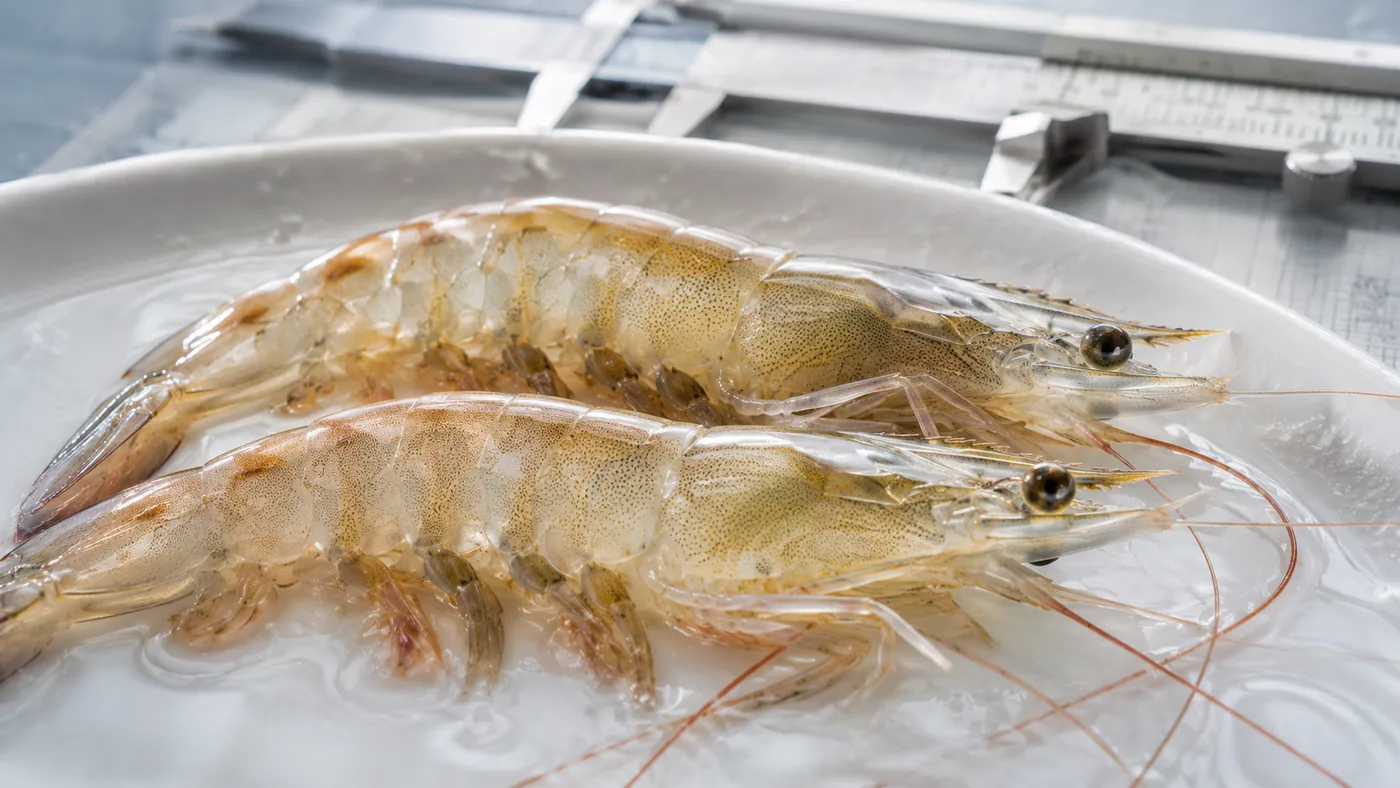
- The Indian White Shrimp (Penaeus indicus) is India's premier indigenous penaeid species, revitalized by ICAR-CIBA's National Genetic Improvement Programme to reduce reliance on imported exotic broodstock.
- Penaeus indicus possesses superior plant-protein assimilation capacity, thriving on economical 28% to 32% crude protein formulated feeds containing mustard cake, de-oiled rice bran, and soybean meal.
- Native evolutionary adaptations make indicus highly tolerant of wide salinity swings (5 to 45 ppt), elevated summer water temperatures (> 33°C), and low dissolved oxygen events compared to exotic species.
- Integrating artificial periphyton substrates (sugarcane bagasse, bamboo mats, and netting) stimulates natural biofilm grazing, slashing commercial feed requirements by up to 25% and dropping FCR to 1.12–1.20.
- With 50% lower aeration energy demands (0.5 to 0.7 HP per ton biomass) and zero broodstock import royalties, the cost of production for indicus drops to ₹180–₹210 per kg.
- Penaeus indicus is ideally suited for low-input coastal polyculture with herbivorous and omnivorous finfish like Milkfish (Chanos chanos), Pearlspot (Etroplus suratensis), and Seaweeds (Gracilaria spp.).
Field Case Study: 8-Acre Low-Input Indigenous Indicus Farming
A small-holder farming collective operating 4 earthen ponds in the Marakkanam estuarine cluster shifted from high-cost Vannamei farming to the ICAR-CIBA selected Indian White Shrimp (Penaeus indicus) strain. Using low-cost 30% crude protein formulated plant-protein feed, natural estuarine periphyton grazing substrates, and reduced paddlewheel aeration (0.6 HP/ton), the farm produced 11.2 metric tons of premium Indian White Shrimp. With feed costs 34% lower than commercial Vannamei diets and zero royalty import seed costs, the collective reduced total cost of production to ₹182/kg and realized a net profit of ₹3,42,000 per hectare in domestic and regional export markets.
1. The Indigenous Imperative: ICAR-CIBA Selective Breeding & National Species Diversification
For more than a decade, India's $5.5+ billion aquaculture economy has operated on a dangerously narrow monoculture foundation: over 90% of total export shrimp production relies exclusively on the exotic Pacific White Shrimp (Litopenaeus vannamei). This extreme genetic monoculture exposes the national industry to devastating biosecurity vulnerabilities, international broodstock import supply-chain shocks, expensive intellectual property royalties, and severe price depression caused by global oversupply of small-count shrimp.
In response, the Indian Council of Agricultural Research – Central Institute of Brackishwater Aquaculture (ICAR-CIBA), under the Department of Fisheries (Pradhan Mantri Matsya Sampada Yojana - PMMSY), launched the flagship National Genetic Improvement Programme for Indian White Shrimp (Penaeus indicus). By establishing biosecure Nucleus Breeding Centers (NBC) and multiplication hatcheries across Tamil Nadu, Kerala, Andhra Pradesh, and Gujarat, India has created high-health, selectively bred indigenous SPF post-larvae with accelerated growth rates and high survival.
Penaeus indicus is the native penaeid shrimp of the Indian Ocean, historically cultured across the traditional Pokkali fields of Kerala, the Bheries of West Bengal, and the estuarine creeks of the Coromandel coast. Revitalizing this indigenous species provides coastal aqua-farmers with a resilient, low-cost, sovereign farming alternative that eliminates reliance on costly imported broodstock while producing a sweet, firm, highly palatable shrimp prized across domestic and overseas Asian markets.
ICAR-CIBA Selected Strains vs Wild Germplasm
Unlike unselected wild seeds that suffer from wide size variations and slow growth, CIBA's genetically improved Penaeus indicus families exhibit standardized growth trajectories, reaching 22 to 28 grams in 85 to 100 days under semi-intensive culture.
Farmers must procure post-larvae (PL12 to PL15) exclusively from CAA-accredited hatcheries utilizing certified SPF indicus broodstock screened negative by nested PCR for White Spot Syndrome Virus (WSSV), Enterocytozoon hepatopenaei (EHP), and Infectious Hypodermal and Haematopoietic Necrosis Virus (IHHNV).
| Operational Parameter | Indigenous Indian White Shrimp (P. indicus) | Exotic Pacific White Shrimp (L. vannamei) | Farm-Level Benefit |
|---|---|---|---|
| Broodstock Origin | 100% Domestic SPF (ICAR-CIBA / NBC) | Imported from US / Singapore / LatAm | Zero import dependency & lower seed cost |
| Optimal Dietary Protein | 28% – 32% Crude Protein | 35% – 40% Crude Protein | 30% to 38% reduction in feed cost / kg |
| Plant-Protein Utilization | Exceptional (Tolerates 40%+ Soy/Canola) | Moderate (Requires high marine meals) | Enables sustainable low-cost local feeds |
| Aeration Requirement | 0.5 – 0.7 HP / ton standing biomass | 1.0 – 1.2 HP / ton standing biomass | 45% to 50% savings on electricity/diesel |
| Cost of Production (COP) | ₹ 180 – 210 / kg | ₹ 260 – 310 / kg | Superior economic safety margin against low prices |
Penaeus indicus post-larvae exhibit higher natural schooling activity than vannamei. When stocking PLs at dawn, ensure pond water has a rich diatom bloom (Secchi depth 30–35 cm); indicus juveniles begin active natural grazing on microalgae and zooplankton within 2 hours of release.
2. Biological & Physiological Advantages: Low-Protein Adaptability, Salinity Tolerance & Disease Resilience
Penaeus indicus possesses physiological traits that make it uniquely adapted to tropical coastal and estuarine farming environments. Having evolved across the warm Indo-Pacific coastlines, indicus exhibits an extraordinarily wide thermal tolerance window (22°C to 35°C), maintaining active gastric evacuation and growth even during peak summer heatwaves when vannamei suffers thermal stress and reduced feed intake.
From an osmoregulatory perspective, Indian White Shrimp are euryhaline champions, tolerating salinities ranging from 5 ppt in river mouths to 45 ppt in hyper-saline saltpans. In low-salinity estuarine ponds (5 to 15 ppt), indicus demonstrates superior potassium and magnesium ion retention, drastically reducing the need for costly commercial synthetic mineral re-fortification products that burden vannamei farmers.
Most importantly, the digestive system of Penaeus indicus features elevated levels of endogenous carbohydrases (amylase, cellulase, and maltase) alongside robust proteases. This enzymatic profile allows indicus to efficiently digest complex plant-derived carbohydrates, non-starch polysaccharides, and plant proteins—unlocking the ability to formulate low-cost, low-marine-meal diets without sacrificing growth rates.
Microbial Resilience & Gut Health
Because Penaeus indicus is indigenous to Indian coastal waters, its natural gut mucosal microbiota has co-evolved with endemic marine bacterial communities. Under moderate stocking densities, indicus shows strong competitive exclusion against opportunistic green-colony Vibrio species.
When supported by routine fermented probiotic applications (Bacillus subtilis and Lactobacillus plantarum), indicus exhibits near-zero incidence of White Feces Syndrome (WFS) and running mortality, which frequently plague intensively stocked exotic species.
Unlike vannamei, which tends to crowd feeding trays aggressively, Penaeus indicus displays active, uniform grazing across the entire pond floor. Distribute feed evenly across wide feeding lanes rather than concentrating rations along dyke edges to optimize nutrient absorption.
3. Low-Cost Pond Preparation & Periphyton Biofilm Substrate Engineering
A major commercial advantage of Indian White Shrimp farming is the ability to utilize low-cost, nature-based pond preparation techniques that minimize expensive chemical sanitizers. Earthen ponds are prepared by draining, desilting central channels, and solar drying the substrate for 10 to 14 days until soil cracking reaches 2 to 3 cm depth.
Apply Agricultural Lime (CaCO3) @ 500 to 800 kg/ha in neutral soils (pH 7.0–7.5) or Agricultural Dolomite @ 400 to 600 kg/ha to establish baseline carbonate alkalinity (> 100 ppm CaCO3). Intake water is filtered through 80-mesh and 100-mesh nylon filter socks at the sluice gate. Primary water disinfection requires only 15 to 20 ppm active Chlorine Bleaching Powder (35% available chlorine)—substantially lower than the 30–50 ppm dosages required in ultra-intensive exotic farms.
The cornerstone of low-input indicus farming is the installation of artificial periphyton substrates. Suspend submerged vertical strips of bamboo poles, agricultural shade netting (50% density), or sugarcane bagasse mats in the water column (providing an additional surface area equal to 20% to 30% of total pond bottom area). Within 7 to 10 days, these substrates become colonized by a dense, living biological turf (periphyton) comprising diatoms (Navicula, Nitzschia), filamentous algae, nitrifying bacteria, copepods, and rotifers.
Periphyton Carbon Dosing Protocol
To accelerate periphyton colonization, brew a natural starter tea: mix 15 kg fermented rice bran (FRB), 5 kg jaggery, 100 g dry baker's yeast, and 100 liters of filtered pond water, fermenting for 24 hours under continuous aeration before broadcasting across the substrate zones.
Penaeus indicus grazes continuously on this high-protein living biofilm (28% to 35% protein dry weight) 24 hours a day, providing continuous micronutrients, natural enzymes, and immunostimulants while simultaneously absorbing dissolved inorganic nitrogen (TAN and NO2⁻).
| Pond Substrate Type | Installation Specification | Biological Colony Formed | Feed Savings % | Operational Benefit |
|---|---|---|---|---|
| HDPE Agri-Netting Strips | 1.0m width vertical hung nets | Diatom & benthic microalgae biofilm | 18% – 22% | Durable, reusable across 6+ crops |
| Split Bamboo Poles | Pitted bamboo posts @ 2 per m² | Attached rotifers, copepods & diatoms | 15% – 20% | Natural, biodegradable organic surface |
| Sugarcane Bagasse Mats | Suspended woven fiber bundles | Dense heterotrophic bacterial biofilm | 22% – 26% | High C:N ratio stimulates rapid bio-purification |
| Palm Fronds / Coconut Husks | Anchored bottom clusters | Epiphytic ciliates & microbenthos | 12% – 16% | Zero material cost in coastal villages |
Installing periphyton substrates reduces commercial pellet feed requirements by 20% to 25% and lowers pond total ammonia nitrogen (TAN) by up to 60%, significantly extending water exchange intervals and preserving biosecurity.
4. Sustainable Feed Formulation: 28–32% Crude Protein, Plant-Based Ingredients & FCR Optimization
Feed constitutes the dominant variable operating expense in commercial aquaculture. While Litopenaeus vannamei and Penaeus monodon demand high-protein feeds (36% to 42% CP) heavily reliant on expensive imported fishmeal and squid meal (costing ₹85 to ₹115/kg), Penaeus indicus achieves superior biological FCR on balanced, low-protein, plant-dominant formulations costing only ₹55 to ₹68/kg.
A scientifically formulated Penaeus indicus grow-out diet contains 28% to 32% crude protein and 5% to 6% crude lipid. Marine fishmeal inclusion can be safely reduced to under 6% to 8%, replacing animal marine proteins with sustainable indigenous agro-industrial coproducts: soybean meal (25–30%), mustard oil cake (10–15%), de-oiled rice bran (15–20%), wheat flour binder (15–18%), and fermented groundnut meal (5–8%).
Commence feeding post-larvae (DOC 1 to 20) with starter crumble @ 1.2 to 2.0 kg per 100,000 PL daily across 3 equal meals (06:30, 12:00, and 17:30). From DOC 21 onward, transition to 1.2 mm and 1.6 mm sinking pellets, allocating 1.0% of the feed ration across 4 checktrays per hectare. Checktray lifting intervals for indicus are standard 1.5 to 2.0 hours.
On-Farm Fermented Feed Pastes (FFP)
Small-holder coastal farmers can further reduce feed expenditure by blending commercial pelleted crumble with fermented feed pastes: mix 40% cooked broken rice, 30% fermented soybean paste, 20% shrimp head meal, and 10% molasses with probiotic Lactobacillus culture.
Feeding this fermented mash during early morning meals enhances gut enzymatic digestion, accelerates growth rates by 15%, and improves feed conversion ratios to 1.10–1.18.
| Ingredient / Component | Low-Cost Indicus Diet (%) | Standard Vannamei Diet (%) | Cost Impact per Metric Ton |
|---|---|---|---|
| Imported Marine Fishmeal | 6.0% – 8.0% | 20.0% – 25.0% | Saves ₹ 18,500 / ton feed |
| Soybean Meal (46% CP) | 28.0% – 32.0% | 22.0% – 25.0% | Cost-effective primary protein source |
| Mustard Cake / Groundnut Meal | 12.0% – 15.0% | 0.0% – 2.0% | Local indigenous agricultural input |
| De-Oiled Rice Bran (DORB) | 16.0% – 20.0% | 5.0% – 8.0% | Low-cost energy & fiber binder |
| Wheat Flour / Starch Binder | 18.0% – 20.0% | 18.0% – 20.0% | Water stability binder (> 2.0 hrs) |
| Squid Oil / Phospholipids | 2.0% – 3.0% | 5.0% – 6.0% | Saves ₹ 6,200 / ton feed |
| Total Diet Formulation Cost | ₹ 58,000 / MT (₹58/kg) | ₹ 88,000 / MT (₹88/kg) | Net savings: ₹ 30,000 / MT (-34.1%) |
Supplement low-protein indicus feeds with 1.0% coated synthetic methionine and 0.5% lysine amino acids along with 10 g/kg dicalcium phosphate. This balances the essential amino acid profile of plant-protein meals, ensuring muscle growth rates identical to high-fishmeal diets.
5. Water Quality Management & Low-Energy Aeration Protocols (0.5–0.7 HP/ton)
Electricity and diesel fuel consumption represent the second largest operating cost in intensive shrimp farming. Intensive Vannamei farms typically operate 24 to 32 HP of paddlewheel aeration per hectare to sustain 8 to 12 tons of standing biomass. In sharp contrast, semi-intensive Penaeus indicus farming (stocked at 25 to 40 PL/m²) operates efficiently on only 4 to 8 HP of aeration per hectare (0.5 to 0.7 HP per ton of biomass).
Penaeus indicus has a lower standard metabolic rate and higher hypoxia tolerance than vannamei, maintaining normal feeding activity at dissolved oxygen concentrations as low as 3.5 ppm. During the first 40 DOC, natural photosynthesis from the diatom bloom and periphyton substrates provides 100% of daytime dissolved oxygen, requiring aeration only from 01:00 AM to 06:00 AM (5 hours daily).
From DOC 41 to harvest, operate aerators for 8 to 10 hours daily (primarily during night and early morning hours). Water quality parameters should be maintained within optimal biological targets: salinity 10 to 30 ppt, pH 7.6 to 8.4 (diurnal fluctuation < 0.4), total alkalinity 110 to 150 ppm CaCO3, TAN < 0.5 ppm, and unionized ammonia (NH3) < 0.03 ppm.
Probiotic Water Conditioning & Alkalinity SOP
Maintain biological water balance by broadcasting fermented rice bran carbon tea (10 kg FRB + 3 kg jaggery + 50 g Bacillus subtilis / ha) every 10 days to support heterotrophic bacterial digestion of organic metabolites.
If total alkalinity drops below 100 ppm, apply Agricultural Limestone (CaCO3) @ 50 kg/ha or hydrated lime (Ca(OH)2) @ 20 kg/ha at night to replenish bicarbonate buffering capacity.
Position paddlewheel aerators to create a gentle circular current (water velocity 0.08–0.12 m/s). This is sufficient to oxygenate the pond and concentrate wastes without stressing juvenile indicus, which prefer moderate current speeds compared to oceanic species.
6. Estuarine Polyculture Innovations: Penaeus indicus with Milkfish (Chanos chanos) & Seaweeds
One of the greatest commercial attributes of the Indian White Shrimp is its exceptional compatibility with multi-trophic estuarine polyculture systems. Unlike aggressive exotic species that attack co-cultured finfish or tear delicate seaweed fronds, Penaeus indicus occupies a distinct benthic ecological niche that integrates harmoniously with herbivorous finfish and macroalgae.
In a proven Integrated Multi-Trophic Aquaculture (IMTA) model developed for coastal lagoons and estuarine ponds, Penaeus indicus is stocked at 25 PL/m² alongside Milkfish (Chanos chanos fingerlings @ 2,500 to 4,000 / ha) and floating raft lines of red seaweed (Gracilaria dura or Gracilaria edulis).
Milkfish graze actively on upper-layer filamentous green algae (Enteromorpha) and excess phytoplankton blooms, preventing bloom crashes and oxygen depletion. Penaeus indicus feeds on benthic detritus and unconsumed sinking pellets on the pond floor, while the suspended Gracilaria seaweeds bio-filter dissolved inorganic nitrogen (TAN and nitrate) and phosphorus from the water column—creating a zero-waste, eco-circular farming system.
Polyculture Economic Yield & Diversification
A 1.0-hectare polyculture pond yields 4,800 kg of Indian White Shrimp (25g avg), 2,200 kg of table-size Milkfish (500g avg), and 3,500 kg (wet weight) of commercial agarophyte seaweed per 100-day cycle.
The harvested Milkfish and seaweed generate over ₹3,20,000 in secondary revenues—completely covering all pond electricity, labor, and seed expenses, effectively reducing the net production cost of the harvested shrimp to near zero.
Stock Milkfish fingerlings (7 to 10 cm size) 20 days after shrimp stocking. Introducing fish after shrimp have reached 3–5 grams ensures post-larvae are well established on the bottom and prevents accidental food competition.
7. Commercial Farm Financial Economics: Indian White Shrimp vs Exotic Vannamei Cost Comparison
To understand why small and medium coastal farmers are embracing Penaeus indicus in 2026, below is a realistic 1.0-hectare operational cost comparison between semi-intensive Indian White Shrimp farming (stocked at 35 PL/m², 88% survival, 24g harvest at 92 DOC = 7,392 kg yield) and intensive Vannamei farming (stocked at 50 PL/m², 82% survival, 24g harvest at 90 DOC = 9,840 kg yield).
While Vannamei generates higher gross biomass volume, its operational cost structure is severely inflated by expensive imported seed, high-protein 38% CP feed, intensive 24-hour aeration electricity bills, and costly chemical/probiotic regimens. Total production cost for Vannamei reaches ₹272 per kg.
In contrast, Penaeus indicus achieves a total production cost of only ₹184 per kg—a massive 32.4% cost advantage. Even when sold at conservative farmgate domestic/export market prices of ₹340/kg (compared to ₹385/kg for Vannamei), the net profit margin for Indian White Shrimp remains exceptionally healthy at ₹156 per kg (45.8% net margin), generating ₹11,53,152 in net profit per hectare with vastly lower financial exposure and near-zero crop failure risk.
Line-Item Financial Breakdown
The economic model below details the line-by-line cost structure. For risk-averse small-holders, farming Penaeus indicus eliminates high-interest working capital debt and guarantees profitable farming even in low-price market cycles.
| Cost / Financial Parameter | Indigenous Penaeus indicus (1.0 Ha @ 35 PL/m²) | Exotic Litopenaeus vannamei (1.0 Ha @ 50 PL/m²) | Cost Variance / Advantage |
|---|---|---|---|
| SPF Post-Larvae Seed | 3,50,000 PLs (@ ₹0.28/PL = ₹98,000) | 5,00,000 PLs (@ ₹0.42/PL = ₹2,10,000) | Seed savings + ₹ 1,12,000 (-53.3%) |
| Commercial Feed OPEX | 8,722 kg (@ ₹58/kg = ₹5,05,876) | 12,792 kg (@ ₹88/kg = ₹11,25,696) | Feed savings + ₹ 6,19,820 (-55.1%) |
| Electricity & Diesel Aeration | ₹ 1,45,000 (6 HP system @ 92 DOC) | ₹ 3,80,000 (18 HP system @ 90 DOC) | Energy savings + ₹ 2,35,000 (-61.8%) |
| Chemicals, Lime & Probiotics | ₹ 85,000 (Low-cost natural inputs) | ₹ 2,40,000 (Intensive additives) | Chemical savings + ₹ 1,55,000 (-64.6%) |
| Labor, Leases & Miscellaneous | ₹ 1,28,000 | ₹ 1,65,000 | Operational savings + ₹ 37,000 |
| Total Production Cost (OPEX) | ₹ 9,61,876 (₹ 184.2 / kg) | ₹ 21,20,696 (₹ 272.4 / kg) | Net cost advantage: - ₹ 88.2 / kg (-32.4%) |
| Total Harvest Biomass | 7,392 kg (24g ABW / 41-count) | 9,840 kg (24g ABW / 41-count) | - 2,448 kg lower biomass volume |
| Farmgate Market Realization | ₹ 340 / kg (₹ 25,13,280 gross) | ₹ 385 / kg (₹ 37,88,400 gross) | - ₹ 45 / kg price differential |
| Net Farm Profit / Hectare | ₹ 15,51,404 (ROI: 161.3%) | ₹ 16,67,704 (ROI: 78.6%) | Near-identical net profit with 54% less capital! |
Market your harvested Penaeus indicus through the AquaSangham Direct Trade Desk under the 'Native Indian White' premium branding. Domestic premium seafood retail chains in Bengaluru, Chennai, Mumbai, and Hyderabad pay a 15% to 20% price premium for native, low-chemical, naturally reared indicus shrimp.
Summary Operational Action Checklist
Frequently Asked Questions
Q: Why is Penaeus indicus cheaper to farm than Litopenaeus vannamei?
Penaeus indicus has a 30% to 35% lower cost of production due to three main factors: 1) It thrives on economical 28%–32% crude protein plant-based feeds (costing ₹58/kg vs ₹88/kg for vannamei feeds), 2) It requires 50% less mechanical aeration energy (0.6 HP/ton vs 1.2 HP/ton), and 3) Domestically bred ICAR-CIBA SPF seed is 30%–50% cheaper than imported exotic broodstock post-larvae.
Q: What is the optimal stocking density for Indian White Shrimp in earthen ponds?
In standard semi-intensive earthen coastal ponds, the recommended stocking density is 25 to 40 post-larvae per square meter (250,000 to 400,000 PL/ha). This density enables shrimp to reach 22 to 28-gram commercial size in 85 to 100 days with minimal mechanical aeration and maximum utilization of natural periphyton food.
Q: Can Penaeus indicus be cultured in low salinity (5 to 10 ppt)?
Yes. Penaeus indicus is a highly euryhaline native species adapted to estuarine and river mouth environments. In salinities between 5 and 15 ppt, indicus exhibits excellent osmoregulatory retention of potassium and magnesium ions, growing rapidly without suffering from the muscle cramping often seen in exotic species.
Q: How do periphyton substrates reduce feeding costs in indicus farming?
Submerged substrates (like bamboo poles or netting) grow a rich microbial biofilm consisting of diatoms, microalgae, bacteria, and zooplankton. Penaeus indicus grazes on this high-protein natural food continuously, which fulfills 20% to 25% of its daily nutritional needs and lowers commercial feed FCR to 1.12–1.20.
AquaSangham Technical Advisory
Indigenous Species & Sustainable Coastal Mariculture Desk
Contributing Senior Technical Writer & Aqua Consultant at AquaSangham.
Recommended Farming Guides
Western Blue Shrimp (Penaeus stylirostris) Intensive Culture: Lessons from New Caledonia
Read Article →Farming TechGreen Tiger Prawn (Penaeus semisulcatus) Culture Protocols for Gulf of Mannar Coastal Ponds
Read Article →Farming TechKuruma Prawn (Penaeus japonicus) Culture in Sandy Substrates: High-Value Export SOP
Read Article →Get Live Farm Advice on AquaSangham Mobile App
Download India's #1 Aquaculture Super App for real-time market prices, precision tools, and community advice.
Download Free Android App