Executive Summary & Key Takeaways
- The germicidal efficacy of chlorine is governed strictly by un-ionized Hypochlorous Acid (HOCl), which is 80 to 100 times more potent than the hypochlorite ion (OCl-); chlorination must be executed at pH 6.5–7.5 (pre-dawn) when HOCl yields exceed 75%–80%.
- Always calculate dosages using Free Available Chlorine (FAC) rather than gross product weight; achieving 30 ppm FAC requires ~930–1,000 kg of fresh 32% Bleaching Powder or ~460 kg of 65% Calcium Hypochlorite (HTH) per hectare-meter.
- Never chlorinate turbid water directly; raw intake water must be filtered through 100-mesh filter socks and settled for 24–48 hours to minimize organic chlorine demand, which otherwise wastes 50% to 65% of the applied chemical.
- Never broadcast dry powder directly into ponds; dissolve the chemical in 200L plastic drums, let the insoluble calcium hydroxide lime sludge settle for 15 minutes, and broadcast only the clear chlorine supernatant across active aerator currents.
- Complete de-chlorination before stocking is non-negotiable; neutralize residual chlorine using Sodium Thiosulfate Pentahydrate at an exact stoichiometric ratio of 1.05 kg thiosulfate per 1.0 kg of residual chlorine.
- Never release post-larvae based solely on chemical test kits; always conduct a mandatory 24-hour in-situ bio-assay using 30 healthy post-larvae inside a 100-mesh floating hapa to confirm 100% survival before stocking.
Field Case Study: 6-Hectare Biosecurity Turnaround in Creek-Fed Coastal Ponds
A 6-hectare brackishwater shrimp farming cluster drawing water from a tidal creek suffered catastrophic White Spot Syndrome Virus (WSSV) outbreaks in three consecutive crops due to inadequate water filtration and improper bleaching powder application (dry gunny bag dragging at high noon pH 8.6). Under AquaSangham advisory, the farm implemented a two-stage biosecurity protocol: intake water was routed through 100-mesh monofilament filter socks into a 1.2-hectare settling reservoir, sedimented for 36 hours, and chlorinated at 05:30 hrs (ambient pH 7.5) with 30 ppm active chlorine using decanted calcium hypochlorite slurry. After 72 hours of paddlewheel aeration, residual chlorine (tested at 1.4 ppm via DPD colorimeter) was neutralized using stoichiometric sodium thiosulfate @ 17.6 kg/ha. In-situ 24-hour bio-assays confirmed zero PL stress before full stocking. Over the next 115 days, the cluster maintained zero viral outbreaks, achieving an average harvest of 38.2 tons of Vannamei (6.36 t/ha) with an exceptional 1.24 FCR and net margin exceeding ₹14.8 Lakhs.
1. The Biosecurity Imperative: Disinfection Chemistry & HOCl Dynamics
Biosecurity in modern commercial aquaculture is not merely a precautionary checklist; it is the absolute dividing line between high-yielding operational profitability and catastrophic crop liquidation. Across coastal farming hubs in Andhra Pradesh, Gujarat, Tamil Nadu, and Odisha, virulent biological pathogens—specifically White Spot Syndrome Virus (WSSV), Enterocytozoon hepatopenaei (EHP), Infectious Myonecrosis Virus (IMNV), and acute hepatopancreatic necrosis disease (AHPND / Early Mortality Syndrome caused by pirAB-bearing Vibrio parahaemolyticus strains)—routinely gain entry into aquaculture ponds via wild estuarine vectors and unsterilized intake waters. Wild zooplankton vectors such as copepods (Acartia, Oithona), mysid shrimp, wild larval crustaceans, and crab zoeae harbor latent viral loads. Once pumped into an untreated culture pond, these vectors multiply rapidly, shedding viral particles and microsporidian spores directly into the water column.
The primary chemical defense mechanism utilized across global mariculture to achieve absolute pathogen and vector eradication prior to post-larval stocking is water and sediment chlorination. When executed with scientific precision, chlorination obliterates viral nucleocapsids, denatures microsporidian spore walls, oxidizes bacterial cell membranes, and kills all wild macro-vectors within hours. However, empirical field audits across Indian shrimp farming belts reveal that more than 65% of commercial farms execute chlorination incorrectly. Common field errors include calculating dosages based on gross product weight rather than Free Available Chlorine (FAC), broadcasting un-dissolved dry powder that sinks into benthic mud and produces toxic, persistent chloramines, chlorinating during high-pH alkaline afternoons where the chlorine molecule dissociates into ineffective hypochlorite ions, and failing to verify complete chemical neutralization before stocking. This master technical guide provides the definitive, field-tested Standard Operating Procedure (SOP) for pond bleaching and chlorination, complete with exact stoichiometric formulas, limnological conditioning, residual neutralization kinetics, and occupational safety mandates.
To master chlorination, farm managers must first comprehend the underlying aquatic chemistry of chlorine compounds. When commercial chlorine sources—such as Calcium Hypochlorite [Ca(ClO)2] or Bleaching Powder [CaOCl2]—dissolve in water, they undergo rapid hydrolysis to yield Hypochlorous Acid (HOCl) and hypochlorite ions (OCl-):
Ca(ClO)2 + 2 H2O -> Ca(OH)2 + 2 HOCl
HOCl <-> H+ + OCl-
The biocidal efficacy of this chemical equilibrium is overwhelmingly governed by the concentration of un-ionized Hypochlorous Acid (HOCl). Hypochlorous acid is an electrically neutral molecule structurally similar to water. Because it bears no net electrical charge, HOCl effortlessly penetrates the negatively charged phospholipid bilayers of bacterial cell walls, viral envelopes, and protozoan spore coats. Once inside the pathogen cytoplasm, HOCl oxidizes sulfhydryl groups (-SH) in essential enzymes, destroying metabolic respiration and inducing irreversible cellular lysis within 10 to 30 seconds. In stark contrast, the hypochlorite ion (OCl-) carries a negative electrical charge. Electrostatic repulsion between the negatively charged ion and the negatively charged pathogen cell membrane impedes penetration. Laboratory disinfection assays confirm that HOCl is 80 to 100 times more potent as a germicide than OCl-.
The critical operational variable determining the ratio of HOCl to OCl- in pond water is pH: At pH 6.0, ~97% of free available chlorine exists as active HOCl; at pH 7.0, ~78% exists as active HOCl; at pH 7.5, ~50% exists as active HOCl; at pH 8.0, only ~22% exists as active HOCl; and at pH 8.5, less than ~9% exists as active HOCl. Commercial pond water across coastal brackishwater farms frequently exhibits high midday pH levels between 8.3 and 8.8 due to intense microalgal photosynthesis. If a farmer broadcasts bleaching powder into a pond at 14:00 hrs when water pH is 8.6, less than 9% of the chemical is active as germicidal HOCl, rendering the treatment ineffective against hardened spores like EHP and requiring double or triple the chemical dosage. Disinfection must therefore be timed during pre-dawn or early morning hours (04:00 to 07:30 hrs) when water pH is at its diurnal minimum (7.4 to 7.8), or buffered proactively with organic acids.
Never apply chlorine during midday peak sunlight or high water pH (>8.2). Dosing between 04:30 AM and 07:00 AM maximizes the percentage of un-ionized hypochlorous acid (HOCl > 75%) while preventing rapid photolytic breakdown from intense solar ultraviolet radiation.
2. Chlorine Chemical Sources & Stoichiometric Dosage Formulas
Commercial aquaculture facilities utilize three primary sources of active chlorine, each possessing distinct chemical purity, storage stability, solubility characteristics, and sediment residues. Understanding these differences allows farm managers to optimize cost per kilogram of active Free Available Chlorine (FAC) while avoiding benthic soil contamination.
1. Commercial Bleaching Powder (Stable Bleaching Powder / Chlorinated Lime): A complex mixture of calcium hypochlorite, calcium chloride, and calcium hydroxide containing 30% to 33% Free Available Chlorine when freshly manufactured. While it represents the most widely available and economical chemical in rural aquaculture markets, it suffers from rapid degradation in humid tropical climates (losing 1% to 2% active chlorine per month). Crucially, commercial bleaching powder contains 15% to 20% insoluble calcium hydroxide lime sludge which, if broadcast directly into earthen or lined ponds, settles as a dense, anaerobic chalk layer that suffocates benthic microbial flora.
2. High-Test Hypochlorite (HTH / Purified Calcium Hypochlorite): Granular industrial-grade Ca(ClO)2 containing 65% to 70% Free Available Chlorine. HTH is manufactured via sodium-process or calcium-process synthesis, yielding a highly refined white granule that dissolves rapidly with minimal insoluble residue (< 3%). It exhibits outstanding chemical stability, losing less than 0.2% active chlorine per month when stored in airtight factory drums.
3. Liquid Sodium Hypochlorite (NaOCl): A clear, yellowish liquid disinfectant containing 10% to 12% Free Available Chlorine. Because it is completely liquid, it leaves zero particulate sediment or lime sludge. However, liquid sodium hypochlorite degrades exceptionally fast at temperatures exceeding 30°C, incurs heavy transportation costs due to high water weight (90% water), and contains free caustic soda (NaOH) that can spike pond water pH.
The Golden Stoichiometric Dosing Formula
Never calculate pond chemical requirements using guesswork or gross bag counts. Field dosing must always be determined using water volume and tested active ingredient concentration:
Required Chemical Weight (kg) = [Pond Water Volume (m³) × Target Active Chlorine (ppm)] / [Product Active Chlorine Percentage (%) × 10]
Where: Pond Water Volume (m³) = Pond Water Surface Area (m²) × Average Water Depth (m).
Standard Field Calculation Example: A 1.0-hectare earthen reservoir (10,000 m²) with a water depth of 1.2 meters contains 12,000 m³ of water. The technical biosecurity protocol mandates an active chlorine target of 30 ppm to eradicate wild viral vectors. The farm is utilizing commercial bleaching powder with a certified laboratory assay of 32% active chlorine:
Required Product = [12,000 m³ × 30 ppm] / [32 × 10] = 360,000 / 320 = 1,125 kg (45 bags of 25 kg each).
If utilizing High-Test Hypochlorite (65% HTH) for the identical pond volume: Required HTH = [12,000 × 30] / [65 × 10] = 360,000 / 650 = 553.8 kg (approx. 11 drums of 50 kg each).
| Chemical Parameter | Commercial Bleaching Powder (30%) | High-Test Hypochlorite (HTH 65%) | Liquid Sodium Hypochlorite (10%) | Stabilized Chlorine Dioxide (ClO2) |
|---|---|---|---|---|
| Active Chlorine (FAC) | 30% – 33% | 65% – 70% | 10% – 12% | N/A (260% oxidizing equiv.) |
| Physical State | Powder with 15–20% lime sludge | Dry white refined granules | Clear alkaline liquid | Two-part liquid or micro-tablets |
| Storage Stability | Poor (1%–2% loss / month) | Excellent (< 0.2% loss / month) | Very Poor (rapid heat decay) | Excellent (12+ months unmixed) |
| Dosage for 30 ppm / Ha-m | 900 – 1,000 kg (36–40 bags) | 430 – 460 kg (9 drums of 50kg) | 2,500 – 3,000 Liters | 100 – 140 kg precursor |
| Pond pH Effect | Mild increase via Ca(OH)2 | Neutral to mild alkaline shift | Sharp increase via free NaOH | Zero pH alteration |
| Sediment Residue | Heavy white insoluble sludge | Negligible soluble calcium | Zero particulate residue | Zero particulate residue |
| Application Ease | Labor-intensive slurry decanting | Rapid dissolution in drums | Direct pumping or pouring | Pre-activation required |
| Average Cost / Hectare-Meter | ₹22,000 – ₹28,000 (Budget) | ₹38,000 – ₹46,000 (Commercial Gold) | ₹34,000 – ₹42,000 (Freight heavy) | ₹58,000 – ₹78,000 (Specialty) |
Before purchasing bulk consignments of bleaching powder, always request a fresh batch certificate and perform an on-site iodometric titration test. Commercial bleaching powder stored in coastal warehouses during the monsoon often drops from 33% down to 18%–22% active chlorine due to moisture absorption, leading to severe under-dosing if calculated using default factory ratings.
3. Pre-Chlorination Reservoir Conditioning, Turbidity & Filtration
A fundamental, widespread flaw in coastal pond management is the immediate chlorination of raw, turbid estuarine creek water directly following pumping. Chlorine is a completely non-selective oxidizing agent. It reacts instantly with any oxidizable material in the aquatic medium—including dissolved organic carbon (DOC), humic substances, un-ionized ammonia, microalgal cells, and suspended clay colloids—before it ever comes into contact with viral nucleocapsids, EHP microsporidian spores, or wild copepod vectors.
This initial, rapid chemical consumption is known as the Chlorine Demand of the water:
Total Applied Chlorine = Chlorine Demand + Free Available Chlorine (FAC) Residual
If estuarine intake water exhibits an organic chlorine demand of 16 ppm and the farm operator applies an uncalculated gross dose of 20 ppm, only 4 ppm of free available chlorine remains active in the water column. A residual of 4 ppm is completely inadequate to penetrate the chitinous spore wall of Enterocytozoon hepatopenaei or destroy WSSV-carrying macro-crustaceans, resulting in false biosecurity and recurrent crop disease.
To eliminate organic interference, protect chemical capital, and maximize biocidal lethality, farm operators must enforce a strict Three-Step Pre-Chlorination Conditioning SOP:
Standard Three-Step Pre-Chlorination Conditioning SOP
Step 1: Multi-Stage Mechanical Mesh Filtration. Raw creek water must be pumped through a series of progressive filtration barriers. The primary intake pipe must feature an external 10-mesh stainless steel trash screen to exclude fish, floating debris, and large crabs. The discharge outlet into the reservoir must be fitted with dual-layered filter sock bags: an outer 60-mesh nylon protective sleeve and an inner 100-mesh (150-micron) monofilament bolting cloth bag securely clamped with marine-grade stainless steel hose clamps. This 100-mesh barrier physically intercepts microscopic crab zoeae, barnacle cyprids, and adult copepod vectors, preventing them from seeding the pond.
Step 2: Static Reservoir Sedimentation. Pumped intake water must be retained in an untreated settling reservoir for a minimum of 24 to 48 hours without aeration. Gravity sedimentation allows heavy suspended silt, clay platelets, and particulate organic matter to settle to the reservoir floor. This quiescent settling period reduces total suspended solids (TSS) by 60% to 75%, slashing the baseline chemical chlorine demand from >15 ppm down to <4 ppm and saving the farm up to ₹15,000 per hectare in chemical costs.
Step 3: Pre-Dosing pH and Alkalinity Verification. Exactly 2 hours prior to chemical application, test morning water pH using a calibrated digital meter. If water pH exceeds 8.0, broadcast agricultural citric acid or technical-grade hydrochloric acid (under certified engineering supervision) @ 20 to 30 kg/ha to depress ambient water pH to 7.2–7.6. This simple adjustment immediately doubles the active hypochlorous acid (HOCl) fraction from ~22% to over ~78%.
Check your filter bags every 3 hours during pumping. Silt and mud buildup inside 100-mesh filter socks creates back-pressure that can rupture the bag seams, discharging millions of wild vectors directly into your reservoir. Always operate dual alternating filtration lines so bags can be inverted and pressure-washed without halting the intake pumps.
4. Step-by-Step Field Execution: Slurry Decanting & Aerator Dispersion
Dragging dry gunny bags of bleaching powder behind a boat or throwing dry powder directly from dykes across the pond surface is an unacceptable, obsolete practice that wastes up to 45% of the chemical investment. Dry calcium hypochlorite granules are heavier than water; when broadcast dry, they sink directly into the soft benthic mud where they react with anaerobic sediment iron and sulfides, forming toxic insoluble crusts while leaving the upper and middle water column under-chlorinated.
The Standard Slurry Decanting and Hydrodynamic Broadcasting Protocol:
1. Mobile Slurry Mixing Stations: Position 4 to 6 heavy-duty 200-liter food-grade plastic drums along the windward pond dykes or mounted securely aboard a flat-bottomed HDPE broadcasting boat. Fill each drum approximately 70% full with clean pond water.
2. Controlled Slurry Dissolution: Slowly add 25 to 30 kg of bleaching powder or calcium hypochlorite per drum while stirring vigorously with a rigid PVC paddle. CRITICAL SAFETY RULE: Never pour water into dry chemical; always add chemical slowly into water. Adding water to dry powder creates localized boiling, violent thermal reactions, and hazardous toxic chlorine gas clouds.
3. Slurry Decanting: Allow the drum slurry to stand undisturbed for 15 to 20 minutes. The heavy, insoluble calcium hydroxide [Ca(OH)2] lime filler settles rapidly to the drum bottom as a thick white sludge. Carefully siphon or pour the clear, chlorine-saturated supernatant liquid into broadcasting buckets, leaving the inert lime sludge at the bottom. Discard the spent lime sludge on dry ground outside the farm dyke system; never dump lime sludge into the culture pond.
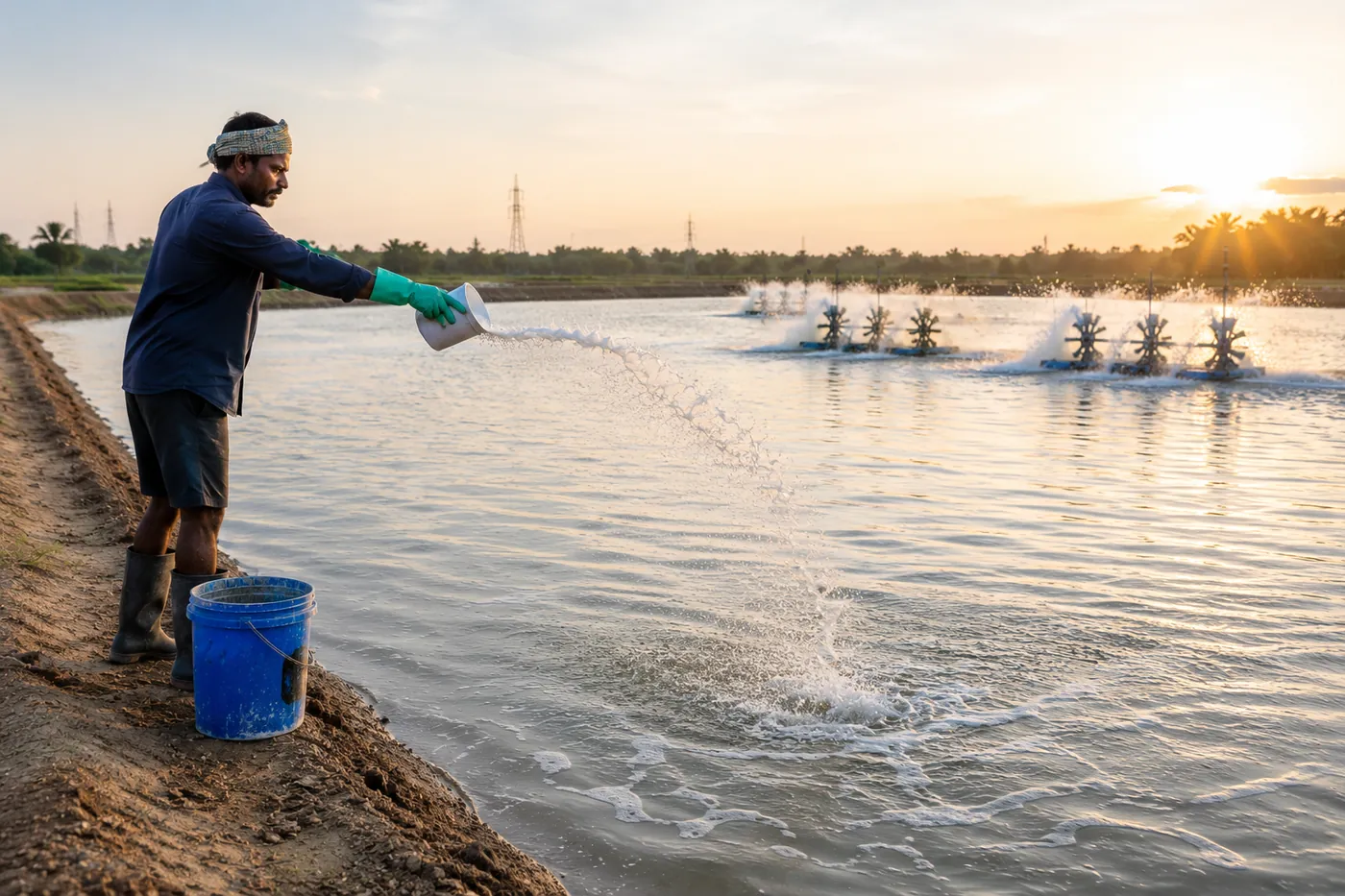
4. Synchronized Paddlewheel Aerator Dispersion: Start all pond paddlewheel aerators (minimum 8 to 12 HP per hectare) at full speed 15 minutes before broadcasting. Broadcast the decanted liquid chlorine solution directly into the turbulent white-water wake behind the paddlewheel blades. The high-velocity hydraulic vortex rapidly drives the dissolved hypochlorous acid across the pond surface and downward through the entire vertical water column, ensuring 100% volumetric distribution with zero stagnant dead zones.
5. Perimeter Dyke and Sluice Disinfection: Broadcast a concentrated band of undiluted chlorine solution along the shallow dyke waterlines, internal corners, and around concrete sluice gate frames where burrowing wild crabs, amphipods, and resting pathogen cysts accumulate.
6. Minimum Biocidal Contact Time: Maintain continuous paddlewheel aeration for a minimum of 24 to 36 hours post-application to ensure total contact time against stubborn viral envelopes and fungal spores.
Always broadcast chlorine working from the downwind dyke toward the upwind dyke, or navigate your broadcasting boat across the wind. Broadcasting downwind prevents ambient breeze from blowing irritating chlorine vapor and corrosive droplets back into the faces of the farm crew.
5. Chemical Neutralization with Sodium Thiosulfate & Residual Testing
Following successful water sterilization, all residual active chlorine and toxic chloramines must be completely eliminated from the pond before microalgal bloom development (pond fertilization) and post-larval shrimp stocking can take place. Even minuscule trace concentrations of residual chlorine as low as 0.05 ppm cause severe branchial gill hyperplasia, strip the delicate cuticular mucus layer of post-larvae, and induce 100% mortality within hours of stocking.
Natural Photolytic Dissipation vs. Chemical De-Chlorination: Under intense, cloudless tropical sunlight and continuous paddlewheel aeration, free available chlorine naturally photodegrades into harmless chloride ions (Cl-) and oxygen gas over 5 to 7 days. However, during overcast monsoon cycles, rainy weather, or in high-salinity seawater where chlorine reacts with natural bromides to form persistent, photostable hypobromous acid and bromamines, natural dissipation can take 10 to 14 days. These delays cause costly operational bottlenecks and allow airborne insects to re-infest the pond. To achieve immediate, controlled de-chlorination, commercial farms utilize technical-grade Sodium Thiosulfate Pentahydrate (Na2S2O3·5H2O).
Stoichiometric Neutralization Chemistry: Sodium thiosulfate is a rapid, non-toxic reducing agent that reacts with free chlorine according to the following stoichiometric reaction:
Na2S2O3 + 4 Cl2 + 5 H2O -> 2 NaHSO4 + 8 HCl
Under commercial aquaculture pond water conditions, practical stoichiometry dictates that 1.05 kg of technical-grade Sodium Thiosulfate Pentahydrate neutralizes exactly 1.0 kg of residual chlorine (a ratio of 1.05 to 1.10 ppm thiosulfate per 1.0 ppm residual Cl2).
Analytical Testing & De-Chlorination SOP
1. Quantitative DPD Colorimetric Testing: Test pond water twice daily (at 07:00 and 16:00 hrs) using a digital DPD (N,N-diethyl-p-phenylenediamine) colorimeter or high-precision multi-range test kit capable of measuring Free and Total Chlorine down to 0.01 ppm. Take water samples from a depth of 50 cm at four distinct pond quadrants. Never rely on yellow Orthotolidine (OTO) droplet kits for stocking verification; OTO is a hazardous human carcinogen with poor analytical sensitivity below 0.1 ppm that frequently yields false-negative readings in the presence of organic compounds.
2. Calculating Sodium Thiosulfate Dosage: On Day 3 post-chlorination, if water testing reveals a residual free chlorine level of 1.5 ppm across a 1-hectare pond (12,000 m³ water volume), calculate the required thiosulfate dose:
Thiosulfate Required (kg) = Pond Volume (m³) × Residual Chlorine (ppm) × 1.05 / 1,000
Thiosulfate Required = 12,000 × 1.5 × 1.05 / 1,000 = 18.9 kg of Sodium Thiosulfate.
Dissolve the thiosulfate crystals thoroughly in 200 liters of clean water and broadcast directly across the paddlewheel aerator streams. Residual chlorine will drop to 0.00 ppm within 60 to 90 minutes.
3. The Mandatory 24-Hour Live Bio-Assay Challenge: Never release expensive commercial post-larvae into a culture pond based solely on chemical test kits. Always perform an in-situ biological challenge 24 hours prior to stocking: Suspend a fine-mesh floating hapa (100-mesh silk) in the pond water column, or place 30 active, healthy post-larvae (PL10–PL12) into a 20-liter aerated bucket filled with pond water. Monitor the prawns continuously for 24 hours. If 100% of the animals display active swimming, clear and fully packed hepatopancreas, normal gut fullness, and zero mortalities, the pond water is formally certified safe for commercial stocking.
Do not over-dose sodium thiosulfate excessively beyond the stoichiometric requirement. Excess thiosulfate consumes dissolved oxygen (acting as a chemical reducing agent) and can create localized benthic anoxia that impedes initial phytoplankton bloom development. Always dose thiosulfate strictly according to verified DPD test readings.
6. Benthic Soil Disinfection & HDPE Liner Biofilm Eradication
True farm biosecurity requires simultaneous chemical disinfection of the benthic pond floor, farm infrastructure, and intake pipelines. Pathogen spores—most notably Enterocytozoon hepatopenaei (EHP)—are encapsulated within thick, two-layered spore walls reinforced with chitin and structural proteins. These microsporidian spores can survive completely desiccated in dry earthen cracks, saline sediment pores, and concrete joints for multiple seasons.
Benthic Treatment in Earthen Ponds: Following crop harvest, pond bottoms must be thoroughly drained and sun-dried until deep drying cracks appear (minimum 10 to 15 cm depth). In chronic disease-affected ponds where black anaerobic sludge cannot be mechanically excavated, apply a concentrated Chlorinated Bleaching Slurry directly into wet depressions, drain canals, and central sumps: Mix commercial bleaching powder with water to formulate a thick 10% slurry (100 g/L) and spray or pour directly into wet mud puddles and central sumps @ 300 to 500 kg/ha. Follow immediately with Quicklime (calcium oxide, CaO) @ 1,000 to 1,500 kg/ha. The combination of active chlorine and the extreme exothermic caustic reaction of CaO drives soil pH above 11.5, triggering irreversible mechanical extrusion and destruction of the EHP spore polar filament.
HDPE Lined Pond Disinfection: Smooth geomembrane liners accumulate resilient bacterial and diatom biofilms. Biofilms act as protective shields for pathogenic Vibrio parahaemolyticus and fungal spores, rendering ordinary water chlorination ineffective against surface-attached pathogens.
1. High-Pressure Washing: Wash all liner floors, dykes, and aerator floats using commercial high-pressure water jets (150 to 200 bar) to strip away organic biofilms and stubborn algal crusts.
2. Surface Hypochlorite Spraying: Formulate a 50 to 100 ppm active chlorine solution (1.5 kg of 65% HTH per 1,000 liters of water) in a motorized agricultural knapsack sprayer. Thoroughly spray down all liner surfaces, aerator shafts, paddle blades, central drain sumps, and crab fences until completely wet. Allow a minimum contact time of 4 hours before washing down with clean water.
Pay special attention to the underside of paddlewheel aerator floats and central siphon drain pipes. These shaded, high-moisture zones harbor thick Vibrio biofilms that survive empty pond drying. Disassemble drain covers and spray all hidden surfaces with 100 ppm chlorine solution.
7. Occupational Safety, Worker PPE & Hazardous Chemical Storage
Concentrated chlorine sanitizers are aggressive chemical oxidizers classified as hazardous industrial substances. Improper handling, improper storage, or lack of protective equipment can lead to severe chemical burns, irreversible corneal blindness, and acute respiratory trauma from toxic chlorine gas inhalation.
Mandatory Personal Protective Equipment (PPE) for Farm Labor: 1. Respiratory Protection: Farm workers handling dry chemical powders, mixing slurry, or operating broadcasting boats must wear NIOSH-approved half-mask respirators fitted with acid gas / chlorine vapor cartridges (e.g., 3M 6000 series with 6002 cartridges) or minimum N95 particulate dust masks. Standard cloth or surgical masks offer zero protection against toxic chlorine gas. 2. Eye and Face Protection: Chemical splash-proof sealed safety goggles conforming to ANSI Z87.1 standards. Full face shields must be worn during high-volume bucket mixing and decanting. 3. Skin Protection: Heavy-duty chemical-resistant nitrile or neoprene gauntlet gloves extending to mid-forearm, waterproof PVC aprons or boiler suits, and steel-toed rubber safety gumboots.
Chemical Storage and Segregation Rules: Bleaching powder and calcium hypochlorite must be stored in a dedicated, locked, dry, and well-ventilated chemical storage shed constructed with concrete flooring and corrugated roofing. Drums must be kept on wooden or plastic pallets at least 15 cm off the ground to prevent moisture ingress. THE CRITICAL CHEMICAL SEGREGATION RULE: Under no circumstances should chlorine compounds be stored adjacent to organic substances, agricultural molasses, diesel fuel, lubricating oils, fertilizers, or acids. Accidental contact between calcium hypochlorite and organic molasses or petroleum products triggers spontaneous exothermic combustion, violent chemical explosions, and lethal chlorine gas clouds.
Emergency First-Aid SOP for Chemical Exposure
Eye Exposure: Immediately flush eyes with clean, running water or sterile eye-wash solution for a continuous 15 minutes, holding the eyelids wide open. Transport the worker immediately to the nearest hospital ophthalmology unit; never apply neutralizing chemical drops.
Skin Exposure: Immediately strip off all contaminated clothing and drench the affected skin under a deluge shower or clean water stream for at least 15 minutes. Wash gently with mild non-abrasive soap. Treat chemical burns with sterile burn dressings.
Inhalation of Chlorine Gas: Immediately move the victim to fresh, open air upwind of the contamination source. Loosen tight collars and belts. Keep the patient warm, quiet, and in an upright sitting position. Administer oxygen if trained medical personnel are present. Seek emergency medical evaluation immediately; pulmonary edema from chlorine inhalation can develop up to 24 hours post-exposure.
Always keep two 25-liter carboys of clean, sterile fresh water and an emergency eyewash bottle directly beside the chemical mixing drums on the pond dyke. In a chemical splash incident, every single second of delay before irrigation multiplies the severity of permanent tissue damage.
Summary Operational Action Checklist
Frequently Asked Questions
Q: Why is broadcasting bleaching powder at noon or during sunny afternoons ineffective?
Pond water pH naturally rises during sunny afternoons (often reaching 8.4 to 8.8) due to intense microalgal photosynthesis consuming dissolved carbon dioxide. At pH 8.5, less than 9% of active chlorine exists as germicidal Hypochlorous Acid (HOCl), while over 91% dissociates into the weak hypochlorite ion (OCl-), which is 80 to 100 times less effective at penetrating pathogen cell walls. Furthermore, solar ultraviolet (UV) radiation rapidly photolyzes free chlorine into chloride ions, destroying up to 50% of the active chemical within 45 minutes. Chlorination must always be conducted during early morning hours (04:30 to 07:00 AM) when water pH is at its diurnal minimum (7.4 to 7.8) and UV radiation is absent.
Q: What is the difference between Commercial Bleaching Powder (30%) and High-Test Hypochlorite (65% HTH)?
Commercial Bleaching Powder contains 30% to 33% active chlorine and includes 15% to 20% insoluble calcium hydroxide lime filler, which leaves a heavy white sludge on the pond bottom and degrades rapidly during storage (1%–2% loss per month). High-Test Hypochlorite (HTH) contains 65% to 70% active chlorine, is highly refined with less than 3% insoluble residue, dissolves rapidly and cleanly, and retains its potency for years with minimal chemical loss (< 0.2% per month). While bleaching powder is cheaper per gross bag, HTH requires less than half the storage space, reduces freight costs, eliminates benthic lime sludge, and delivers more consistent, predictable sterilization results.
Q: How do I calculate the exact amount of Sodium Thiosulfate needed to neutralize residual chlorine?
The stoichiometric ratio requires 1.05 kg of technical-grade Sodium Thiosulfate Pentahydrate (Na2S2O3·5H2O) to neutralize exactly 1.0 kg of residual chlorine. To calculate pond requirements: Measure residual chlorine using a calibrated DPD colorimeter (e.g., 1.2 ppm). Multiply pond water volume in cubic meters by the residual chlorine in ppm, multiply by 1.05, and divide by 1,000. For example, in a 10,000 m³ pond with 1.2 ppm residual chlorine: 10,000 × 1.2 × 1.05 / 1,000 = 12.6 kg of Sodium Thiosulfate. Dissolve crystals in water and broadcast across paddlewheel aerator streams for complete neutralization within 90 minutes.
Q: Why does chlorinating murky or turbid water result in biosecurity failure?
Chlorine is an un-selective oxidizing agent that reacts instantly with any organic or inorganic material in the water column—including suspended clay platelets, humic acids, phytoplankton, and dissolved organic carbon (DOC). This initial consumption represents the 'Chlorine Demand' of the water. If turbid water possesses a chlorine demand of 15 ppm and a farmer applies 20 ppm gross chlorine, only 5 ppm of free available chlorine remains to fight pathogens—a concentration completely insufficient to kill EHP microsporidian spores or wild crab larvae. Water must always be filtered through 100-mesh bags and allowed to settle in a reservoir for 24–48 hours to remove turbidity before chlorination.
Q: Why must farm workers wear acid-gas respirators rather than standard cloth or N95 masks when handling chlorine?
When calcium hypochlorite or bleaching powder contacts ambient moisture or water, it rapidly volatilizes into toxic Chlorine Gas (Cl2) and Hypochlorous Acid vapors. Cloth and standard N95 masks are mechanical particulate filters designed solely to trap solid dust particles; they offer zero chemical absorption against gaseous chlorine. Inhaled chlorine gas reacts with the moisture in human lung tissue to form hydrochloric acid, causing acute pulmonary inflammation, chemical burns to bronchial linings, and potentially fatal delayed pulmonary edema. Workers must wear half-mask elastomeric respirators equipped with chemical cartridges certified for acid gases and chlorine vapors (e.g., 3M 6002 cartridges).
AquaSangham Technical Advisory
Water Biosecurity & Chemical Engineering Desk
Contributing Senior Technical Writer & Aqua Consultant at AquaSangham.
Recommended Farming Guides
Total Ammonia Nitrogen (TAN) Mass Balance Math: Sizing Biofilters in Commercial RAS
Read Article →Farming TechThe Recirculating Aquaculture System (RAS) Master Guide: Design, Hydraulics & Mass Balance
Read Article →Farming TechIndigenous Magur (Clarias batrachus) Induced Breeding & Nursery Rearing SOPs
Read Article →Get Live Farm Advice on AquaSangham Mobile App
Download India's #1 Aquaculture Super App for real-time market prices, precision tools, and community advice.
Download Free Android App