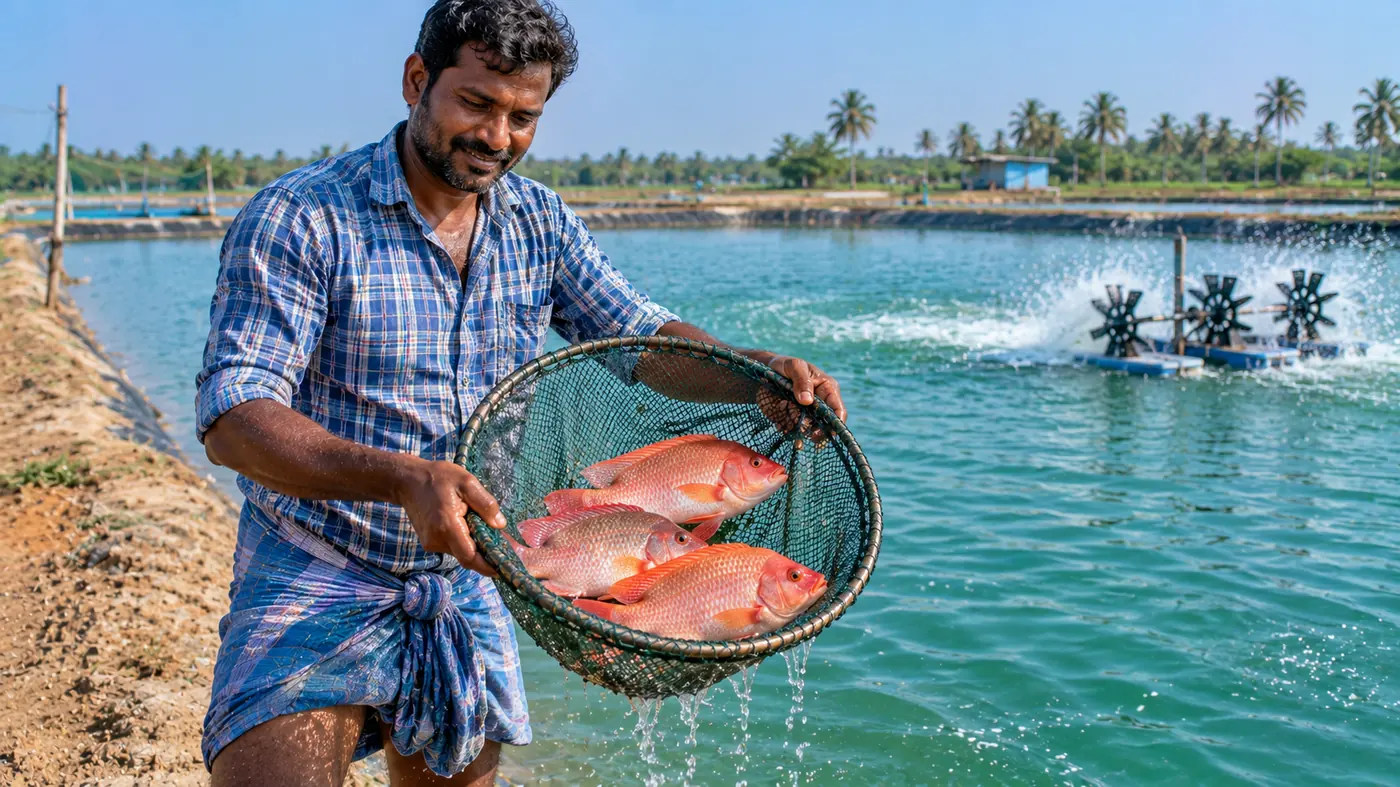
Executive Summary & Key Takeaways
- Red Tilapia hybrids (O. mossambicus × O. niloticus) combine rapid somatic growth with extreme euryhaline genetics, flourishing in coastal brackishwater salinities from 10 to 28 ppt.
- Never transfer freshwater fingerlings directly into saline ponds; execute a strict step-up acclimation schedule increasing salinity by no more than 2.0 to 2.5 ppt per 24 hours to allow chloride cell proliferation.
- Culturing Red Tilapia in idle coastal shrimp ponds breaks viral (WSSV) and microsporidian (EHP) pathogen cycles naturally while sanitizing benthic organic sludge.
- Brackish water naturally eliminates common freshwater ectoparasites (Argulus fish lice, anchor worms, Ich), enabling completely pesticide-free, residue-free finfish production.
- Incorporate dietary Betaine Anhydrous (@ 5 g/kg) and natural carotenoids (Spirulina @ 5 g/kg) during the final 30 days to optimize osmoregulation and impart an intense, glowing ruby-pink skin.
- Live Red Tilapia commands premium farmgate prices of ₹180 to ₹220 per kg in urban culinary markets, delivering profit margins exceeding 40% per hectare.
Field Case Study: 6-Acre Coastal Shrimp Pond Crop Diversification
A coastal shrimp farmer facing recurrent White Spot Syndrome Virus (WSSV) during the cold winter window (November to February) decided to diversify into brackishwater finfish rather than leaving three 2-acre ponds idle. Sourcing 45,000 graded all-male Red Tilapia fingerlings (25g size), the farm implemented the AquaSangham Stepwise Salinity Acclimation SOP, raising salinity from 2 ppt to 18 ppt over 8 days without a single loss. The fish were stocked at 3.5 fish/m² and fed 28% CP extruded floating pellets. Culturing tilapia in saline water eliminated common freshwater ectoparasites (Argulus, Trichodina) naturally, while fish grazing on benthic organic matter kept the pond bottom completely free of black sludge. At Day 130, the farm harvested 27.2 metric tons of uniform 680g ruby-red fish. Marketed live to premium seafood restaurants in Hyderabad and Chennai at ₹195/kg, the winter crop generated ₹53 Lakhs in gross revenue and ₹14.2 Lakhs in net profit, establishing Red Tilapia as the premier biosecure rotation crop for Indian coastal shrimp farms.
1. The Hybrid Advantage: Euryhaline Genetics & The 'Red Snapper' Premium
Along the vast coastal mariculture belts of India—from the saline estuarine flats of Andhra Pradesh (Krishna, Godavari, and Nellore districts) and the Coromandel coast of Tamil Nadu to the brackish bheries of West Bengal and the Gulf of Khambhat in Gujarat—shrimp aquaculture has long reigned as the undisputed export powerhouse. However, escalating production risks associated with viral pathogens (White Spot Syndrome Virus / WSSV, Infectious Myonecrosis Virus / IMNV), microsporidian parasites (Enterocytozoon hepatopenaei / EHP), seasonal temperature depressions during winter, and unpredictable international trade tariffs have forced progressive coastal farmers to seek viable biological and commercial diversification.
Among all candidate finfish species capable of transforming idle or disease-fallowed coastal shrimp ponds into highly profitable production assets, Red Tilapia (Oreochromis mossambicus × Oreochromis niloticus) stands in a class of its own. Unlike standard black or wild-type Nile tilapia that are strictly limited to freshwater and perceived as low-value commodity fish, Red Tilapia is an extraordinary genetic hybrid. By combining the rapid growth rate, deep body conformation, and high fillet yield of the Nile tilapia (O. niloticus) with the extreme euryhaline salinity tolerance of the Mozambique tilapia (O. mossambicus), geneticists created a fish that thrives across salinity gradients ranging from pure freshwater (0 ppt) up to full-strength seawater (35 ppt).
Beyond its rugged euryhaline biology, Red Tilapia commands extraordinary consumer appeal. Its brilliant ruby-pink, coral-orange, and golden-red coloration closely mimics high-value wild marine reef fish such as the Red Snapper (Lutjanus campechanus). Marketed in five-star hotels, luxury seafood restaurants, and premium urban fish boutiques under culinary designations such as 'Cherry Snapper' or 'Freshwater Red Snapper', live Red Tilapia commands farmgate prices of ₹180 to ₹220 per kilogram—representing a dramatic 50% to 75% price premium over standard black tilapia and carps.
Furthermore, integrating Red Tilapia into coastal shrimp farm rotations creates a powerful biological biosecurity barrier. When stocked in idle shrimp ponds or culture reservoirs, tilapia actively graze on benthic organic detritus, unconsumed feed sediments, and filamentous algae. Through their digestive secretions, they release antimicrobial peptides and foster diverse microalgal 'greenwater' blooms that suppress pathogenic luminous Vibrio bacteria, sanitizing the pond ecosystem for subsequent shrimp crops. This master clinical guide details the complete operational blueprint for brackishwater Red Tilapia culture.
Comparative Biological & Market Advantages
1. Broad Salinity Tolerance: Survives and grows vigorously in salinities from 0 to 28 ppt, making it ideal for coastal estuaries and brackish borewells.
2. Aesthetic Market Superiority: Lacks black melanin pigmentation; pure ruby-pink skin commands premium culinary appeal and higher farmgate margins.
3. Natural Parasite Immunity: Common freshwater fish parasites cannot survive salinities above 8 ppt, eliminating chemical parasitic treatments.
Stock all-male Red Tilapia fingerlings to prevent unwanted reproduction. While female Red Tilapia can reproduce in low salinity, reproduction completely ceases above 18 ppt, allowing even mixed-sex stocks to maintain uniform growth in high-salinity coastal ponds.
2. Stepwise Salinity Acclimation: The 2.0 ppt / 24-Hour Step-Up SOP
The single largest cause of mortality in coastal Red Tilapia farming is rushing the salinity acclimation process:
- The Lethal Salinity Shock: Transferring fingerlings directly from freshwater hatchery bags (0–2 ppt) into a 15 ppt brackish pond triggers acute osmotic shock. Hemolymph osmolality spikes from a normal 300 mOsm/kg to over 450 mOsm/kg within 60 minutes. Gill lamellae dehydrate and collapse, heart rate plummets, and fish suffer 70% to 90% mortality within 24 hours.
- The 2.0 ppt / 24-Hour Step-Up Protocol: To allow gill tissue sufficient time to synthesize new chloride cells and upregulate Na+/K+-ATPase enzymes, salinity must be elevated gradually: Nursery Acclimation Phase: Transfer 15g to 20g fingerlings into dedicated shaded acclimation tanks or lined hapas supplied with freshwater. Stepwise Saline Inflow: Increase salinity by strictly no more than 2.0 to 2.5 parts per thousand (ppt) per 24-hour period. For example, transitioning fish from 2 ppt to 18 ppt requires exactly 8 consecutive days of controlled saline water blending. Verification: Monitor voluntary feed intake daily. If fish cease feeding or exhibit lethargy, pause salinity increases for 48 hours until active surface schooling resumes. Once fingerlings reach the target pond salinity (e.g., 18 ppt), they can be safely released into grow-out ponds with zero mortality.
| Acclimation Day | Target Salinity (ppt) | Daily Salinity Step-Up (ppt) | Daily Feeding Rate (% Biomass) | Na+/K+-ATPase Pump Activity | Minimum DO (ppm) | Fish Behavioral Status |
|---|---|---|---|---|---|---|
| Day 1 (Arrival) | 2.0 – 3.0 ppt | Baseline Hatchery Level | 1.5% Maintenance | Baseline Freshwater Level | > 6.0 ppm | Calm, schooling near tank bottom |
| Day 2 | 4.5 – 5.0 ppt | + 2.0 ppt / 24h | 2.5% Starter Crumble | Chloride cell proliferation initiates | > 6.0 ppm | Active surface feeding begins |
| Day 3 | 7.0 – 7.5 ppt | + 2.5 ppt / 24h | 3.0% Biomass | Enzyme upregulation accelerating | > 5.5 ppm | Voracious surface schooling |
| Day 4 (Isosmotic Point) | 9.5 – 10.0 ppt | + 2.5 ppt / 24h | 3.5% Biomass | Peak metabolic efficiency (Isosmotic) | > 5.5 ppm | Zero osmotic gradient stress |
| Day 5 | 12.0 – 12.5 ppt | + 2.5 ppt / 24h | 3.2% Biomass | Active hyper-osmoregulation begins | > 5.5 ppm | Drinking reflex established |
| Day 6 | 14.5 – 15.0 ppt | + 2.5 ppt / 24h | 3.0% Biomass | Mitochondria-rich cells fully dense | > 5.0 ppm | High vigor, active swimming |
| Day 7 | 17.0 – 17.5 ppt | + 2.5 ppt / 24h | 2.8% Biomass | Basolateral ion extrusion stabilized | > 5.0 ppm | Full saline physiological adaptation |
| Day 8 (Pond Release) | 18.0 – 20.0 ppt | + 1.5 – 2.5 ppt | 3.0% Biomass (Normal) | Fully mature marine-type chloride cells | > 5.0 ppm | Ready for open grow-out pond stocking |
Note that Day 4 (approx. 10 ppt) represents the isosmotic point where pond water salinity equals the internal blood salinity of the fish. At 10 ppt, the fish expends zero energy on osmoregulation; growth rates peak and feed conversion is at its absolute biological maximum.
3. Repurposing Coastal Shrimp Ponds: Biosecurity & Crop Rotation
Rotating Red Tilapia through coastal shrimp ponds delivers unmatched biological and financial benefits:
- Breaking the Shrimp Pathogen Cycle: Leaving shrimp ponds idle during winter or disease outbreaks allows viral spores (WSSV) and microsporidians (EHP) to persist in benthic cysts. Tilapia are completely immune to WSSV and EHP. Culturing a 120-day crop of Red Tilapia sanitizes the pond bed: the omnivorous fish stir up benthic sediments, ingest pathogen reservoirs, and digest organic sludge, breaking the viral transmission cycle naturally.
- The 'Greenwater' Biofilter Effect: Red Tilapia digestion promotes a stable, dense bloom of beneficial microalgae (Chlorella, Chaetoceros). The microalgae secrete natural fatty acids and extracellular compounds that competitively outcompete pathogenic green-colony Vibrio parahaemolyticus, reducing bacterial loads by up to 90% in intake reservoirs.
- Stocking Density in Earthen Shrimp Ponds: Stock graded, saline-acclimated Red Tilapia fingerlings (25g–35g) at 3.0 to 4.5 fish per square meter (12,000 to 18,000 fish per acre). Maintain pond water depth at 1.4 to 1.6 meters, supported by 3 to 4 HP of paddlewheel aeration per acre.
If using Red Tilapia in a greenwater reservoir to supply water to adjacent shrimp ponds, stock tilapia at a low density of 1.0 to 1.5 fish/m² without supplementary feed. The fish graze on microalgae and detritus, creating a clean, probiotic-rich greenwater effluent that prevents shrimp vibriosis.
4. Osmoregulatory Nutrition: Electrolytes & High-Salinity Feeding SOPs
In saline water, fish expend a higher percentage of dietary energy on branchial ion pumping. Nutritional formulation must compensate for this metabolic work:
- Dietary Osmoprotectants: Formulate or top-dress commercial extruded feeds with Betaine Anhydrous (trimethylglycine @ 5.0 g/kg feed). Betaine functions as a compatible organic osmolyte, stabilizing intracellular enzyme structures and cellular hydration without increasing metabolic energy expenditure.
- The Protein Step-Down Schedule: Phase 1 (25g to 150g): Feed a 32% Crude Protein, 6% lipid floating pellet (size 2.0mm) at 4.0% body weight daily, split into 3 meals. Phase 2 (150g to 400g): Feed a 28% Crude Protein, 5% lipid floating pellet (size 3.0mm) at 2.8% body weight daily, split into 2 meals. Phase 3 (400g to Harvest 750g+): Feed a 24% to 26% Crude Protein, 4% lipid floating pellet (size 4.0mm) at 1.8% body weight daily, fed twice daily.
- Achieving Superior FCR: High-salinity water improves fish flesh firmness and texture. By utilizing floating extruded pellets, farm operators maintain strict feed control, locking in an exceptional Feed Conversion Ratio of 1.24 to 1.30 across the entire grow-out cycle.
Coat finishing pellets with refined fish oil (10 mL/kg) and Betaine Anhydrous during the final 3 weeks of culture. The fish oil enhances fillet omega-3 fatty acid profiles, while betaine preserves cellular moisture, preventing post-harvest drip loss during transport.
5. Water Chemistry in Brackish Finfish Ponds: Alkalinity, Hardness & Minerals
Brackish mariculture ecosystems require distinct limnological management:
- Total Alkalinity & Hardness: Maintain total alkalinity strictly between 120 and 160 mg/L as CaCO3. Calcium and magnesium ions in brackish water provide essential structural cofactors for osmoregulatory ATPases; maintain a Magnesium-to-Calcium ratio (Mg:Ca) greater than 2.5:1.
- Dissolved Oxygen (DO): Gas solubility decreases as salinity rises. Maintain DO strictly above 4.0 ppm. Deploy long-arm paddlewheel aerators configured to generate a gentle circular current around the pond dykes, keeping floating pellets centered in the feeding zone.
- Parasite Suppression: One of the greatest commercial advantages of brackishwater culture is the complete natural absence of common freshwater ectoparasites (such as Argulus fish lice, Lernaea anchor worms, and Ichthyophthirius multifiliis). These parasites cannot survive in salinities above 8 ppt, allowing farmers to cultivate completely pesticide-free, residue-free fish.
Check water salinity weekly using an optical refractometer with automatic temperature compensation (ATC). If heavy monsoon rain dilutes pond salinity by more than 4 ppt in a day, dose agricultural salt (NaCl @ 500 kg/ha) to prevent hypoosmotic shock.
6. Disease Defense in Saline Culture: Streptococcus vs Marine Vibrio
While freshwater parasites are eliminated, marine bacteria require strict biosecurity:
- Marine Vibriosis (Vibrio vulnificus & V. alginolyticus): Manifests in high-salinity (>15 ppt) warm water (>30°C) with elevated organic loads. Affected fish exhibit lethargy, fin rot, skin ulcerations, and hemorrhaging on the ventral abdomen. Treatment: Avoid unapproved antibiotics. Apply a 20% water exchange, reduce feeding by 50%, dose fermented sugarcane molasses with multi-strain Bacillus probiotics (@ 1.5 kg/acre), and top-dress feed with natural garlic allicin (@ 2 g/kg) and Vitamin C (@ 5 g/kg) for 7 days.
- Streptococcosis Prevention: Prevent Streptococcus iniae outbreaks by ensuring water DO remains > 4.5 ppm, avoiding handling stress during midday heat, and keeping un-ionized ammonia strictly below 0.03 ppm.
Conduct monthly microbiological screenings of pond water on TCBS agar. If yellow colonies (V. alginolyticus) dominate while green colonies remain below 50 CFU/mL, your microbial ecosystem is stable and healthy.
7. Harvesting Protocols, Color Enhancers & Maximum Profitability
Maximizing market realization through coloration and live handling:
- Substrate and Background Color Modulation: Tilapia possess dermal melanophores that expand or contract in response to environmental background colors. If cultured against pitch-black geomembrane liners or anoxic black mud, Red Tilapia develop dark, muddy melanin patches that severely degrade market appeal. Culturing fish in light-colored earthen ponds with emerald-green algal shading preserves a pristine, uniform ruby-red hue.
- Carotenoid Color Fortification: During the final 30 days before harvest, incorporate natural carotenoids—specifically microalgal Spirulina platensis (@ 5.0 g/kg feed) or synthetic Astaxanthin (@ 50 mg/kg feed)—into the finishing diet. Carotenoids deposit directly into the skin and dermal scales, imparting an intense, glowing ruby-coral coloration that commands premium retail prices.
- Live Fish Logistics & Profit Margins: Transport market-ready fish (600g to 800g) in live hauling trucks equipped with liquid oxygen diffusers (maintaining DO > 10 ppm) to urban seafood wholesale mandis in Hyderabad, Bengaluru, and Chennai. Live Red Tilapia sells at farmgate prices of ₹180 to ₹210/kg against production costs of ₹95 to ₹105/kg, delivering net profit margins exceeding 42% and establishing it as the most profitable finfish enterprise in Indian coastal mariculture.
Harvest fish at 05:00 AM while water is cool. Place harvested fish in shaded holding tanks with chilled, oxygenated brackish water (18°C–20°C) for 30 minutes before packing into live-transport trucks. Cold-water conditioning calms fish respiration and cuts transport mortality to under 0.5%.
Summary Operational Action Checklist
Frequently Asked Questions
Q: Why can Red Tilapia thrive in coastal brackish water while standard black Nile tilapia cannot?
Red Tilapia is an interspecific genetic hybrid between the Nile tilapia (Oreochromis niloticus) and the Mozambique tilapia (Oreochromis mossambicus). O. mossambicus is a native euryhaline estuarine species with naturally dense branchial chloride cells (mitochondria-rich cells) that actively excrete sodium and chloride ions against steep external gradients. By inheriting these euryhaline alleles, Red Tilapia can adapt to salinities up to 28 ppt with full somatic vigor, whereas pure O. niloticus experiences severe osmotic stress, stunted growth, and high mortality above 12 to 14 ppt.
Q: Why does direct transfer of freshwater tilapia fingerlings into 15 ppt brackish water cause massive mortality?
When freshwater fingerlings are abruptly transferred to 15+ ppt water, the sudden difference in osmotic pressure draws water out of the fish's bloodstream across the semi-permeable gill lamellae via osmosis. The fish's blood osmolality spikes violently from a normal 300 mOsm/kg to over 450 mOsm/kg within an hour. The gills dehydrate, mucus sloughs off, heart output fails, and fish suffer 70% to 90% mortality. By elevating salinity gradually (no more than 2.0 to 2.5 ppt per 24 hours), gill epithelial cells are given sufficient time to proliferate new chloride cells and upregulate Na+/K+-ATPase enzyme pumps, achieving 98%+ survival.
Q: How does culturing Red Tilapia in idle shrimp ponds help eliminate White Spot Syndrome Virus (WSSV)?
Tilapia are finfish and are biologically immune to crustacean viruses like White Spot Syndrome Virus (WSSV) and microsporidians like EHP. When stocked in idle shrimp ponds, tilapia actively feed on benthic detritus, organic sludge, and residual crustaceans (wild crabs, copepods) that harbor viral particles. Furthermore, tilapia fecal microflora and mucus release antimicrobial peptides that stimulate beneficial green microalgae blooms, which outcompete pathogenic Vibrio bacteria and naturally sanitize the pond environment before the next shrimp crop.
Q: What causes black patches on Red Tilapia skin, and how can farmers guarantee a pure ruby-pink color?
Black patches on Red Tilapia are caused by melanin pigment dispersion in dermal melanophores, triggered by genetic impurity or dark environmental backgrounds (such as black HDPE pond liners or black anoxic mud). To guarantee a brilliant ruby-pink color: 1) Source high-grade monosex Red Tilapia seed with certified low-melanin genetics; 2) Culture fish in light-colored earthen ponds with a healthy greenwater bloom that filters sunlight; and 3) Supplement the finishing diet with natural carotenoids (Spirulina @ 5 g/kg or Astaxanthin @ 50 mg/kg) during the final 30 days before harvest.
Q: What is the market price difference between standard black tilapia and brackishwater Red Tilapia?
Standard black tilapia is sold primarily as an everyday commodity fish in local freshwater markets, fetching farmgate prices of ₹110 to ₹130 per kg. In contrast, brackishwater Red Tilapia possesses a brilliant ruby-pink coloration, firm texture, and sweet flavor profile resembling marine Red Snapper. Transported live to high-end seafood restaurants, five-star hotel kitchens, and premium retail seafood chains in major metropolitan cities (Hyderabad, Bengaluru, Chennai), live Red Tilapia commands farmgate prices of ₹180 to ₹220 per kg—delivering a 50% to 75% revenue premium.
AquaSangham Technical Advisory
Coastal Mariculture & Finfish Diversification Desk
Contributing Senior Technical Writer & Aqua Consultant at AquaSangham.
Recommended Farming Guides
Total Ammonia Nitrogen (TAN) Mass Balance Math: Sizing Biofilters in Commercial RAS
Read Article →Farming TechThe Recirculating Aquaculture System (RAS) Master Guide: Design, Hydraulics & Mass Balance
Read Article →Farming TechIndigenous Magur (Clarias batrachus) Induced Breeding & Nursery Rearing SOPs
Read Article →Get Live Farm Advice on AquaSangham Mobile App
Download India's #1 Aquaculture Super App for real-time market prices, precision tools, and community advice.
Download Free Android App