Executive Summary & Key Takeaways
- Indigenous Magur (Clarias batrachus / Clarias magur) is one of India's most lucrative freshwater fishes, commanding premium farmgate prices of ₹500 to ₹750/kg due to high therapeutic iron and lean protein value.
- Strict legal distinction: Farming the alien invasive African Magur (Clarias gariepinus) is strictly banned by the Government of India and the National Green Tribunal (NGT); commercial hatcheries must culture only certified indigenous stock.
- Sexual dimorphism is distinct in mature adults: females possess a swollen, soft, reddish vascularized genital papilla, while males exhibit a prominent, elongated, conical genital papilla.
- Female breeders require synthetic salmon GnRHa + domperidone (Ovaprim / WOVA-FH) administered intramuscularly at 1.0 to 1.5 mL/kg body weight, followed by stripping after a 14 to 16-hour latency at 27–29°C.
- Unlike carps, male Magur cannot be stripped of milt by abdominal pressure due to the anatomical lobulated structure of their testes; males must be humanely sacrificed to extract and macerate testicular tissue.
- Fertilized eggs are naturally adhesive; treat fertilized egg batches with a 0.05% tannic acid wash or whole cow milk bath for 45 seconds to dissolve sticky gelatinous coatings before tray incubation.
- Incubation trays require continuous flow-through dissolved oxygen (>6.0 ppm) and water temperature at 26°C to 28°C; embryos hatch within 24 to 27 hours.
- Eliminate nursery cannibalism through strict live-feed sequencing (Artemia -> Moina -> Tubifex), submerged plastic mesh hideouts, and mandatory mechanical grading every 5 to 7 days.
Commercial Hatchery Case Study: Scaling Indigenous Clarias magur Seed Production in Eastern India
A specialized freshwater fish breeding facility established an indigenous Magur (Clarias magur) hatchery to meet soaring commercial demand across West Bengal, Assam, Bihar, and Tripura. Operating a 0.5-acre earthen broodstock pond managed with a 35% CP diet enriched with freshwater trash fish and Vitamin E, the hatchery conditioned 1,200 prime female breeders (150g to 250g) and 600 males. Implementing synthetic GnRHa hormone injection (Ovaprim @ 1.2 mL/kg for females and 0.5 mL/kg for males), eggs were hand-stripped after a 15-hour latency period at 28°C and fertilized using sacrificial testicular milt suspensions diluted in 0.9% physiological saline. Eggs were de-adhesed using a mild tannic acid wash and incubated in flow-through fiberglass mesh trays with 89% hatching success. Post-hatch larvae were staged across four nursery tiers: fed freshly hatched Artemia nauplii from Day 3 to Day 10, cultured Moina micrura from Day 11 to Day 20, and finely chopped Tubifex worms blended with 40% micro-crumbles up to Day 35. By enforcing weekly mechanical bar grading and maintaining submerged PVC pipe hideouts, larval cannibalism was reduced to under 6%. The hatchery successfully distributed 2.8 million vigorous, disease-free 6cm fingerlings at ₹2.50 to ₹3.00 each, generating ₹62 Lakhs in gross revenue against ₹16.4 Lakhs in total operational expenditure.
1. Native vs Invasive: Clarias magur vs Banned African Clarias gariepinus
In the freshwater aquaculture landscape of India, few native species evoke as much culinary reverence and commercial enthusiasm as the indigenous Magur (historically classified as Clarias batrachus, and now taxonomically confirmed across South Asia as Clarias magur). Widely celebrated in traditional culinary medicine for its exceptionally high bioavailable iron content (over 226 mg/100g), easily digestible lean protein, and low intra-muscular fat, indigenous Magur is prescribed by physicians for post-operative recovery, anemia convalescence, and lactating mothers.
This extraordinary consumer demand translates into unmatched farmgate and retail economics. While common Indian Major Carps (Rohu, Catla) and Pangasius catfish trade at wholesale prices between ₹75 and ₹140 per kilogram, live indigenous Magur commands between ₹500 and ₹750 per kilogram in municipal wet markets in Kolkata, Guwahati, Patna, Bhubaneswar, and Delhi—making it the single highest-value mass-cultured freshwater finfish in India.
However, the commercial Magur sector has long been plagued by the illicit propagation of the invasive African Sharp-tooth Catfish (Clarias gariepinus, commonly known as 'Thai Magur' or 'African Magur'). Clarias gariepinus is a voracious, aggressive apex predator capable of growing to 5–10 kg within months. In the late 1990s, it escaped into natural waterways, devastating indigenous fish biodiversity, preying on juvenile carps, and spreading foreign pathogens. In response, the Government of India, the Ministry of Fisheries, Animal Husbandry and Dairying, and the National Green Tribunal (NGT) enacted a strict nationwide ban on the breeding, culture, transport, and sale of African Magur. Under federal environmental laws, farms culturing Clarias gariepinus face criminal prosecution, pond confiscation, and mandatory chemical destruction of stocks.
Consequently, establishing certified commercial hatcheries dedicated exclusively to the true indigenous Clarias magur represents both a vital ecological conservation imperative and a massive commercial goldmine. The primary bottleneck constraining the expansion of indigenous Magur farming has always been the acute shortage of quality seed. This master technical guide provides the operational engineering blueprint for commercial induced breeding, sacrificial milt harvesting, and nursery larviculture.
Morphological Identification: Indigenous Magur vs African Catfish
1. Clarias magur (Indigenous): Slender, cylindrical body; max adult weight 200g–400g; mottled brownish-bronze to dark olive skin with white/creamy ventral belly; 4 pairs of slender sensory barbels; rounded caudal fin.
2. Clarias gariepinus (Banned African): Massive, broad flattened head; grows rapidly to 5.0–10.0 kg; uniform slate-grey to black coloration; highly aggressive temperament; wider mouth gape.
3. Legal Status: Indigenous Magur is 100% legal, promoted by NFDB/ICAR, and eligible for 40–60% PMMSY government subsidies. African Magur is an illegal contraband species subject to immediate seizure.
Never attempt to cross-breed indigenous Clarias magur with African Clarias gariepinus. Producing illegal interspecific hybrids violates federal biosecurity statutes, contaminates native gene pools, and will result in processing plant rejection and severe legal penalties.
2. Broodstock Management: Nutrition, Dimorphism & Peak Maturity
The success of induced spawning in Clarias magur is determined 90 days before the first hormone injection is administered. Magur is a seasonal monsoon breeder that naturally matures between June and August in response to monsoonal rains, rising river levels, and photoperiod shifts. Attempting to induce spawn under-conditioned or nutritionally depleted breeders results in low fecundity, poor egg fertilization (<40%), and high embryonic mortality.
Broodstock Pond Architecture & Water Quality: House prospective broodstock in small, dedicated earthen or cement-lined ponds measuring 200 to 500 square meters (0.05 to 0.12 acre) with a shallow water depth of 0.8 to 1.0 meter. Soil bottoms should contain a 10cm layer of soft silt-clay, but avoid deep anoxic black sludge. Provide submerged hollow ceramic tiles, terracotta pipes, or PVC cutouts to act as dark territorial hideouts. Maintain water temperature at 26°C to 29°C, dissolved oxygen > 4.5 ppm, and total alkalinity between 100 and 150 mg/L.
Broodstock Nutrition & Gonadal Conditioning Diet: Stock healthy adult fish (age 1 to 2 years, weighing 120g to 250g) at a low density of 3 to 4 fish per square meter (approx. 500 to 800 grams of biomass per m²). Feed breeders a high-protein, lipid-balanced maturation diet at 3% to 4% of body weight daily: 38% to 40% Crude Protein commercial extruded sinking crumbles fortified with fresh minced trash fish, chopped earthworms, or Tubifex worms twice weekly. Crucially, supplement the feed with Vitamin E (dl-alpha-tocopheryl acetate @ 200 mg/kg feed) and Vitamin C (ascorbyl polyphosphate @ 300 mg/kg feed) for 60 consecutive days prior to the breeding season to stimulate vitellogenin synthesis in female ovaries.
Sexual Dimorphism & Selecting Prime Spawners:
- Selecting the Female: Look for a visibly swollen, soft, distended abdomen that feels yielding and doughy to the touch. The female urogenital opening (papilla) is round, button-like, fleshy, and exhibits a bright pinkish-red vascularized ring. To verify intra-ovarian maturity, insert a sterile 1.2mm plastic cannula into the oviduct and aspirate a sample of ova: prime oocytes are uniform in diameter (1.3 to 1.5mm), spherical, non-sticky, and translucent golden-green, with the germinal vesicle positioned centrally or slightly eccentric.
- Selecting the Male: Mature males display a deep, muscular body with a distinct, elongated, conical urogenital papilla situated just posterior to the anus. In fully mature, prime males, the tip of the conical papilla exhibits a prominent pinkish-red vascularized tip. Body weight should ideally match or slightly exceed the female (150g to 220g).
Segregate male and female breeders into separate ponds or partition nets 30 days prior to the induced breeding season. Keeping sexes isolated prevents premature fighting, territorial biting, and partial unassisted spawning, ensuring maximum egg yield during hormone induction.
3. Hormonal Induction: Synthetic GnRHa Dosing & Temperature Latency
In nature, environmental cues (rainfall, petrichor, cooler water) stimulate the fish hypothalamus to release Gonadotropin-Releasing Hormone (GnRH), which prompts the pituitary to secrete Luteinizing Hormone (LH), triggering final oocyte maturation and ovulation. In captivity, this endocrine cascade is blocked by dopamine, a potent neuro-inhibitor. Consequently, induced spawning requires synthetic hormone formulations that combine a potent GnRH analogue with a dopamine receptor antagonist.
Synthetic Hormone Selection & Formulations:
Commercial hatcheries utilize liquid synthetic preparations containing Salmon Gonadotropin-Releasing Hormone analogue (sGnRHa, 20 µg/mL) combined with Domperidone (10 mg/mL)—marketed commercially under brands such as Ovaprim, Ovatide, or WOVA-FH. These synthetic liquid hormones eliminate the cumbersome collection and maceration of donor carp pituitary glands (CPG), provide standardized potency, and ensure consistent ovulation.
Hormone Administration Protocols:
- Female Dosage: Administer Ovaprim / WOVA-FH at a single intramuscular (IM) dose of 1.0 to 1.5 mL per kilogram of body weight (0.15 to 0.25 mL for a typical 150g female). For early-season breeders (May/June), use 1.5 mL/kg; for peak-season breeders (July/August), 1.0 to 1.2 mL/kg is optimal.
- Male Dosage: Administer a priming dose of 0.5 to 0.7 mL per kilogram of body weight (0.08 to 0.12 mL per 150g male) simultaneously with the females. This hormone surge stimulates rapid sperm maturation and semen liquefaction within the testes.
- Injection Technique: Secure the fish in a wet, soft towel to prevent slipping. Using a 1.0 mL disposable tuberculin syringe fitted with a 24-gauge or 26-gauge needle, inject the hormone intramuscularly into the dorsal epaxial musculature, midway between the base of the dorsal fin and the lateral line, holding the needle at a 30-degree angle pointing towards the head. Gently massage the injection site with your thumb for 5 seconds to prevent hormone reflux.
The Temperature-Dependent Latency Window: Following injection, transfer induced breeders into cool, aerated holding tanks (water temperature 27°C to 29°C) under dim, quiet conditions. The 'latency period'—the exact time elapsed between hormone injection and complete ovulatory release of eggs into the ovarian lumen—is strictly temperature-dependent: At 26°C: 17 to 19 hours; at 28°C: 14 to 16 hours; at 30°C: 12 to 14 hours. Stripping too early yields hard, immature eggs; stripping too late results in over-ripe, necrotic, unfertilizable ova.
| Water Temp (°C) | Female Dose (Ovaprim) | Male Dose (Ovaprim) | Latency Window (Hours) | Oocyte Quality at Stripping | Expected Fertilization % |
|---|---|---|---|---|---|
| 25°C – 26°C | 1.5 mL / kg body weight | 0.7 mL / kg | 17 – 19 Hours | Firm, free-flowing golden-green | 80% – 85% |
| 27°C – 28°C | 1.2 mL / kg body weight | 0.5 mL / kg | 14 – 16 Hours (OPTIMAL) | Pristine, non-viscous, translucent | 88% – 94% |
| 29°C – 30°C | 1.0 mL / kg body weight | 0.5 mL / kg | 12 – 14 Hours | Rapid ovulation; monitor closely | 82% – 88% |
| Above 31°C | 0.8 – 1.0 mL / kg | 0.4 mL / kg | 10 – 12 Hours | High risk of over-ripening / lysis | < 60% (Avoid High Heat) |
Synchronize your injections in the late afternoon (around 17:00 to 18:00 hrs). At an average ambient temperature of 28°C, the 15-hour latency window will mature precisely between 07:00 and 09:00 AM the following morning, allowing technicians to strip and incubate eggs during the cool morning hours.
4. The Male Dilemma: Testicular Anatomy & Sacrificial Milt Extraction
In the induced breeding of common carps, tilapia, and trout, both males and females can be stripped non-destructively by applying gentle external pressure to the abdomen to express semen and eggs. However, in Clarias magur, male stripping is anatomically impossible. This anatomical constraint represents the famous 'Male Dilemma' of Asian catfish culture.
Why Male Magur Cannot Be Stripped: The male reproductive anatomy of Clarias consists of paired, elongated testes situated along the dorsal wall of the peritoneal cavity. The anterior two-thirds of each testis are divided into hundreds of microscopic, finger-like serrated fringes or lobes (testicular lobes) where spermatogenesis occurs, while the posterior third forms a complex seminal vesicle that secretes thick, viscous, proteinaceous seminal plasma. The efferent ducts connecting the lobes to the urogenital papilla are extremely tortuous and narrow. When external abdominal pressure is applied, the viscous seminal fluid creates hydraulic resistance, causing internal testicular rupture rather than semen expression. Forcing pressure simply yields clear mucus with zero sperm.
The Sacrificial Milt Extraction SOP:
To achieve commercial fertilization, males must be humanely sacrificed to dissect out the active anterior testicular lobes:
1. Humane Euthanasia: Take a hormone-induced male breeder (14 to 15 hours post-injection). Submerge the fish in an overdose bath of clove oil (eugenol @ 100 ppm) or MS-222 (200 ppm) for 3 to 4 minutes until opercular gill movement ceases entirely.
2. Aseptic Dissection: Dry the fish thoroughly with clean paper towels. With surgical dissecting scissors, make a mid-ventral incision starting from the anus extending forward to the pectoral girdle. Gently deflect the gastrointestinal tract to expose the paired, serrated, creamy-white testicular lobes lying parallel to the spine.
3. Harvesting the Lobes: Carefully dissect out the anterior testicular lobes, leaving the seminal vesicles behind. Wash the harvested testes immediately in a sterile petri dish containing 0.9% physiological saline (NaCl) to rinse away blood clots (erythrocytes contain enzymes that immobilize sperm).
4. Maceration & Sperm Suspension: Place the cleaned testicular lobes in a dry, sterile porcelain mortar or homogenizer. Add 2.0 to 3.0 mL of cold 0.9% saline solution. Macerate the tissue gently using fine surgical scissors or a pestle, crushing the lobes to release billions of mature spermatozoa into the saline suspension. Strain the mixture through a 100-mesh nylon strainer to remove fibrous tissue fragments. Keep the milt suspension on crushed ice (0°C to 4°C); un-activated sperm in physiological saline remain viable for up to 24 to 36 hours under refrigeration.
A single pair of macerated testes from a 200g prime male yields sufficient sperm suspension to fertilize the eggs of 3 to 4 adult females (approx. 15,000 to 20,000 eggs). Plan your male-to-female sacrifice ratio at strictly 1 male for every 3 females to conserve valuable male broodstock.
5. Artificial Stripping: In Vitro Dry Fertilization & Tannic Acid De-Adhesion
Once the male milt suspension is prepared and chilled, technicians execute the artificial dry stripping of the ovulated females:
The Dry Stripping Procedure:
1. Pre-Stripping Preparation: Anesthetize the induced female lightly in clove oil (30 ppm). Lift the fish and meticulously dry the entire body, fins, and urogenital papilla using soft absorbent cotton towels. Water is the natural activator of both fish sperm and eggs; if even a single drop of water enters the stripping bowl prematurely, the egg micropyle will close and spermatozoa will activate and exhaust their motility before fertilization can occur.
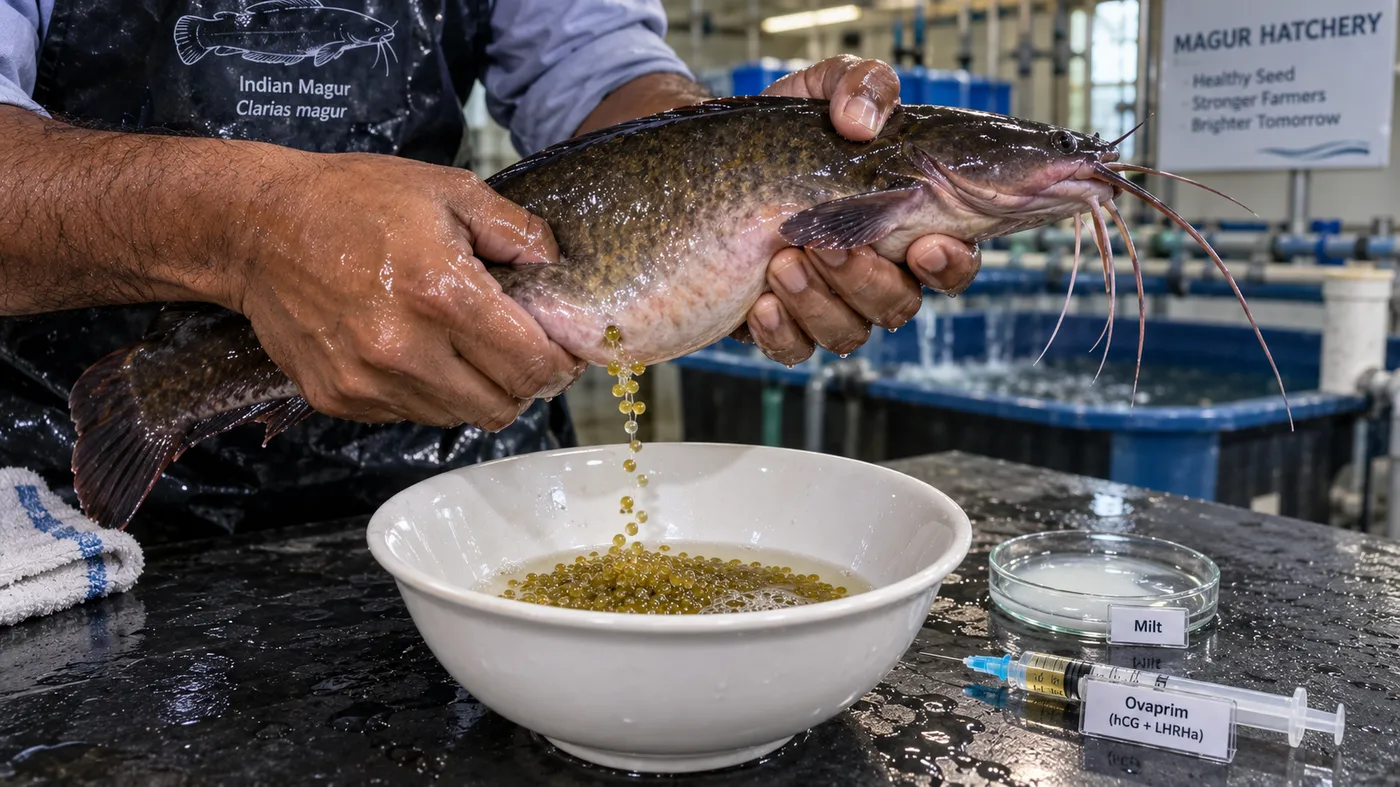
2. Hand Stripping: Hold the female with the head wrapped securely in a clean damp cloth. Position the urogenital opening directly over a dry, clean white porcelain or enamel bowl. Apply gentle, progressive thumb-and-finger pressure along the flank, starting behind the pectoral fins and sliding smoothly towards the genital papilla. In fully ovulated females, a continuous, dense stream of golden-green, spherical ova will flow smoothly into the bowl without resistance.
3. In Vitro Dry Fertilization: Immediately pour 1.0 to 1.5 mL of the chilled male milt suspension directly over the stripped eggs. Using a clean, sterilized bird feather or soft silicone spatula, gently stir the eggs and milt together for 60 seconds to ensure complete physical contact.
4. Water Activation: Add 15 to 20 mL of clean hatchery water to the egg-sperm mixture while continuing gentle feather agitation. The influx of freshwater instantly activates the dormant spermatozoa, which swim vigorously through the open micropyle, achieving 90%+ fertilization within 2 minutes. Let the mixture stand undisturbed for 5 minutes as the eggs hydrate and water-harden.
The Critical De-Adhesion Protocol:
Clarias magur eggs are demersal and naturally adhesive; upon contact with water, the outer chorionic membrane secretes a sticky glycoprotein coat designed to anchor eggs to vegetation in wild swamps. If incubated in commercial trays without treatment, the eggs clump into dense, suffocating balls where unfertilized eggs rapidly develop Saprolegnia fungal mold, destroying the entire batch.
- Tannic Acid De-Adhesion: Prepare a 0.05% Tannic Acid solution (0.5g tannic acid per 1,000 mL clean water). Pour the solution over the fertilized, water-hardened eggs. Gently swirl the bowl for exactly 45 to 60 seconds. Tannic acid cross-links and neutralizes the surface glycoproteins. Decant the tannic acid immediately and rinse the eggs 3 times with clean hatchery water. The eggs are now completely free-flowing, non-adhesive spheres ready for tray incubation.
Do not exceed 60 seconds of tannic acid exposure. Prolonged contact hardens the chorion excessively, preventing embryonic enzymes from breaking the egg shell during hatching, resulting in high hatching mortality. Alternatively, a 10% fresh cow milk wash can be used for 3 minutes as a gentle organic de-adhesion agent.
6. Flow-Through Incubation: Tray Hydraulics & Yolk-Sac Absorption
Incubating Magur eggs requires specialized hatching hardware. Because catfish eggs are demersal (heavier than water) and possess delicate embryonic membranes, standard high-velocity carp circular hatching jars (Chinese hatchery systems) will physically rupture the eggs against the walls.
The Flow-Through Mesh Incubation Tray System:
Commercial Magur hatcheries utilize shallow rectangular fiberglass or aluminum incubation troughs (2.0m length × 0.5m width × 0.2m depth) fitted with removable inner incubation trays. The floor of each tray is lined with fine synthetic nylon monofilament mesh (0.8mm to 1.0mm aperture). Fertilized, de-adhesed eggs are spread across the mesh in a uniform single layer (never stacked more than 1 to 2 eggs deep) at a density of 1,500 to 2,000 eggs per square foot.
Hydraulic & Water Quality Management:
- Continuous Water Flow: Maintain a gentle, laminar flow-through water velocity of 2.0 to 3.0 liters per minute across each tray. Water must enter through a perforated pipe diffuser to prevent turbulence, flowing smoothly beneath and across the mesh to supply continuous oxygen and carry away metabolic carbon dioxide.
- Dissolved Oxygen & Temperature: Maintain DO strictly above 6.0 ppm and water temperature at 27°C to 28°C. Install an overhead UV sterilizer on the intake line to eliminate fungal spores.
- Prophylactic Antifungal Treatment: 6 hours post-fertilization, administer a static prophylactic flush of Methylene Blue (@ 2.0 ppm) or formalin (@ 100 ppm) for 30 minutes to suppress water molds (Saprolegnia). Manually siphone out opaque, white dead eggs with a glass pipette.
Hatching Kinetics & Larval Transition:
At 27°C to 28°C, embryonic development progresses rapidly: Gastrula stage is reached at 6 hours; twitching embryo at 18 hours; and hatching initiates at 24 to 27 hours post-fertilization. The emerging hatchling breaks through the chorion tail-first, wriggling through the 0.8mm mesh and dropping into the lower trough floor, leaving the empty egg shells behind on the upper mesh for effortless disposal.
The newly hatched Magur larva measures 4.5 to 5.5 mm in length, completely transparent, with an enormous golden-yellow yolk sac attached to its ventral abdomen. For the first 72 hours (Day 1 to Day 3 post-hatch), the larvae are photophobic; they seek dark corners and subsist 100% on endogenous yolk-sac reserves. Keep incubation troughs covered with black plastic sheets and maintain gentle continuous aeration.
Maintain total darkness over hatching troughs during the first 3 days. Magur hatchlings possess strong negative phototaxis; exposing them to bright light causes erratic swimming, yolk-sac rupture, and severe larval exhaustion.
7. Nursery Rearing: Live-Feed Sequencing & Cannibalism Suppression
The transition from endogenous yolk-sac nutrition to exogenous live-feed ingestion (Day 3 to Day 4 post-hatch) represents the single greatest mortality bottleneck in Magur aquaculture. In unmanaged systems, larval survival frequently collapses below 20% due to starvation, digestive impaction, and aggressive sibling cannibalism.
Magur larvae are obligate predatory carnivores equipped with a wide mouth gape and an insatiable hunting instinct. If feed particles are too large, larvae starve; if feed is under-supplied for even 3 hours, larger larvae begin swallowing their smaller siblings whole ('head-first' cannibalism).
The AquaSangham Four-Tier Live-Feed Sequencing Protocol:
Tier 1: Artemia Nauplii Staging (Day 4 to Day 10): Exactly on Day 4 (as the yolk sac is 90% absorbed), initiate exogenous feeding with freshly hatched, decapsulated Artemia salina nauplii (instar-I nauplii rich in highly unsaturated fatty acids / HUFA). Feed 4 times daily (06:00, 11:00, 16:00, and 21:00 hrs) at a rate of 50 to 80 nauplii per larva per feeding. Larvae gorge ravenously, their bellies turning a distinct bright orange.
Tier 2: Freshwater Moina & Rotifer Transition (Day 11 to Day 20): By Day 11, larvae reach 12 to 15 mm in length. Transition the diet to cultured freshwater zooplankton—specifically Moina micrura and freshwater rotifers (Brachionus calyciflorus). Moina are soft-bodied, reproduce rapidly in greenwater culture tanks, and provide the exact protein-lipid balance required for rapid skeletal growth. Feed 3 times daily, weaning off Artemia.
Tier 3: Tubifex Worm Minces & Micro-Crumbles (Day 21 to Day 35): At Day 21 (fry reach 2.5 to 3.0 cm), introduce live, thoroughly washed Tubifex tubifex mud worms. Finely chop the worms and blend them with an equal portion of 40% CP commercial micro-extruded crumble (0.5mm size). The live worm scent stimulates voracious feeding, conditioning the fry to accept dry pelleted feed.
Tier 4: Nursery Weaning & Grow-Out Staging (Day 36 to Day 45): Fry attain 4.5 to 6.0 cm in length (fingerling stage) and are fully weaned onto 38% CP commercial floating crumbles (1.0mm size).
Operational Cannibalism Suppression Levers:
1. Mechanical Grading Every 5 Days: Size disparity triggers cannibalism. Pass fry through plastic bar graders every 5 to 7 days, separating populations into uniform size cohorts.
2. Submerged Shelter Havens: Place short sections of perforated 1-inch PVC pipes, nylon netting bundles, or ceramic tiles on the nursery tank floor. Submerged shelters disperse fry territories and prevent dominant shooters from ambushing smaller fish.
3. Round-the-Clock Night Feeding: Magur feed aggressively in the dark. An automated midnight feeding eliminates overnight starvation-induced cannibalism.
| Larval Stage | Age Post-Hatch | Average Length | Primary Feed Type | Daily Feeding Frequency | Water Depth & Management |
|---|---|---|---|---|---|
| Yolk-Sac Larvae | Day 1 – Day 3 | 4.5 – 6.0 mm | Endogenous yolk sac (Zero feed) | None (Keep in total darkness) | 10 – 15 cm; continuous gentle flow |
| Early Fry (Tier 1) | Day 4 – Day 10 | 6.5 – 12.0 mm | Freshly hatched Artemia nauplii | 4 Times Daily (every 5 hours) | 15 – 20 cm; siphoning waste daily |
| Advanced Fry (Tier 2) | Day 11 – Day 20 | 12 – 25 mm | Cultured Moina micrura & Daphnia | 3 – 4 Times Daily | 25 – 30 cm; 30% daily water exchange |
| Pre-Fingerling (Tier 3) | Day 21 – Day 35 | 25 – 45 mm | Chopped Tubifex + 40% Micro-Crumbles | 3 Times Daily | 35 – 45 cm; bar grading every 5 days |
| Certified Fingerling | Day 36 – Day 45 | 50 – 65 mm | 100% Commercial Crumbles (1.0mm) | Twice Daily (08:00 & 17:00) | Ready for grow-out pond stocking |
Thoroughly disinfect live Tubifex worms before feeding. Immerse collected worms in a 5 ppm potassium permanganate (KMnO4) bath for 10 minutes followed by clean running water flushing for 2 hours to purge pathogenic Edwardsiella and Aeromonas bacteria harbored in wild sludge.
8. Hatchery Financial Economics & AquaSangham Certified Seed Radar
The commercial business model of an indigenous Magur hatchery delivers some of the highest returns on investment in Indian agribusiness, driven by low land requirements, rapid 45-day seed turnaround, and massive market price margins.
Comprehensive Financial Model for a 1-Million Fingerling Hatchery (Single 3-Month Monsoon Season):
CAPEX (Initial Capital Setup): Cement circular conditioning tanks, fiberglass incubation troughs with flow-through plumbing, deep tubewell with overhead overhead storage, aeration blowers, and dissecting wet-bench equipment total approximately ₹4.5 to ₹5.5 Lakhs (amortized over 5 years = ₹1.0 Lakh/year).
OPEX per Breeding Season (Target: 1.0 Million 5cm Fingerlings):
- Broodstock Acquisition & Maintenance: 600 kg adult breeders (400 females, 200 males) = ₹1.80 Lakhs.
- Synthetic Hormones & Chemicals: Ovaprim, tannic acid, saline, methylene blue = ₹0.65 Lakhs.
- Live Feeds & Artemia Cysts: 15 kg certified Artemia cysts + Tubifex worms = ₹2.10 Lakhs.
- Commercial Micro-Crumbles: 3.5 Metric Tons nursery feed = ₹2.45 Lakhs.
- Electricity, Pumping & Labor: 2 skilled technicians + utilities for 90 days = ₹2.50 Lakhs.
Total Operating Cost = ₹9.50 Lakhs.
Revenue & Net Profitability:
Producing 1,000,000 certified 5cm indigenous Magur fingerlings sold at the standard farmgate wholesale rate of ₹2.50 per fingerling generates ₹25.0 Lakhs in gross revenue. Deducting OPEX (₹9.50 Lakhs) and annual CAPEX amortization (₹1.0 Lakh) yields a Net Operating Profit of ₹14.50 Lakhs in just 90 operational days—representing an astounding net margin exceeding 58%.
Connecting Hatcheries to Farmers via AquaSangham:
The greatest commercial challenge for specialized native fish hatcheries is market distribution. Through the AquaSangham Certified Seed Radar, licensed hatcheries list their batch-specific DNA-certified indigenous Magur seed. Commercial grow-out farmers across India pre-book fingerlings with verified origin traceability, eliminating middlemen, preventing illegal African Magur substitution, and powering the sustainable revitalization of India's native aquaculture heritage.
Package fingerlings for long-distance transport in heavy 50-micron oxygenated polythene bags (500 to 700 fingerlings per bag with 6 liters of water and 12 liters of pure oxygen). Add 2 ppm of mild clove oil sedative and 2 ppt salt to ensure 99%+ survival during 24-hour interstate transport.
Summary Operational Action Checklist
Frequently Asked Questions
Q: Why is African Magur (Clarias gariepinus) banned in India while Indigenous Magur is encouraged?
African Magur (Clarias gariepinus) is an aggressive, invasive alien carnivore that devastates native riverine ecosystems, consumes juvenile carps, and breeds uncheckably in natural wetlands. It was banned nationwide by the Government of India and the National Green Tribunal. Indigenous Magur (Clarias batrachus / Clarias magur), in contrast, is an endemic Asian species prized for its high therapeutic iron content and medicinal value, fully supported with government subsidies under the PMMSY scheme.
Q: Can male Magur be stripped of milt without sacrificing the fish?
No. Unlike carps, male Clarias magur possess deeply lobulated, serrated testes with narrow, convoluted efferent ducts and viscous seminal vesicles. External abdominal pressure cannot express sperm and will cause internal testicular hemorrhage. Males must be humanely euthanized to dissect out the anterior testicular lobes for milt extraction. However, one male provides sufficient sperm to fertilize the eggs of 3 to 4 females.
Q: Why do fertilized Magur eggs need to be treated with tannic acid?
Magur eggs are naturally adhesive; upon contact with water, their outer chorion secretes a sticky glycoprotein layer that causes eggs to clump into dense balls. Clumped eggs suffocate and succumb to lethal Saprolegnia fungal mold. A brief 45 to 60-second wash in 0.05% tannic acid (or a 3-minute cow milk wash) neutralizes the sticky glycoproteins, leaving the eggs free-flowing for optimal water circulation in hatching trays.
Q: What is the best initial live feed for Clarias magur larvae after yolk-sac absorption?
The gold-standard initial live feed starting on Day 4 post-hatch is freshly hatched, decapsulated Artemia salina nauplii (instar-I). Artemia nauplii are small enough (400–500 microns) for the larval mouth gape, highly motile to stimulate hunting instincts, and rich in essential fatty acids. After 7 days of Artemia, larvae can be transitioned to cultured freshwater Moina micrura and chopped Tubifex worms.
Q: How can hatchery operators prevent cannibalism among juvenile Magur?
Cannibalism is eliminated through four operational steps: (1) Feed live prey (Artemia/Moina) every 4 to 5 hours to prevent hunger, (2) Provide round-the-clock nocturnal feeding, (3) Place submerged PVC pipe cutouts and mesh bundles on tank floors as shelter havens, and (4) Mechanically grade fry through bar graders every 5 to 7 days to keep sizes strictly uniform.
AquaSangham Technical Advisory
Indigenous Finfish Hatchery & Larviculture Desk
Contributing Senior Technical Writer & Aqua Consultant at AquaSangham.
Recommended Farming Guides
Total Ammonia Nitrogen (TAN) Mass Balance Math: Sizing Biofilters in Commercial RAS
Read Article →Farming TechThe Recirculating Aquaculture System (RAS) Master Guide: Design, Hydraulics & Mass Balance
Read Article →Farming TechPangasius Meat Whitening Techniques: Feed Formulation to Prevent Yellow Fillets
Read Article →Get Live Farm Advice on AquaSangham Mobile App
Download India's #1 Aquaculture Super App for real-time market prices, precision tools, and community advice.
Download Free Android App