Executive Summary & Key Takeaways
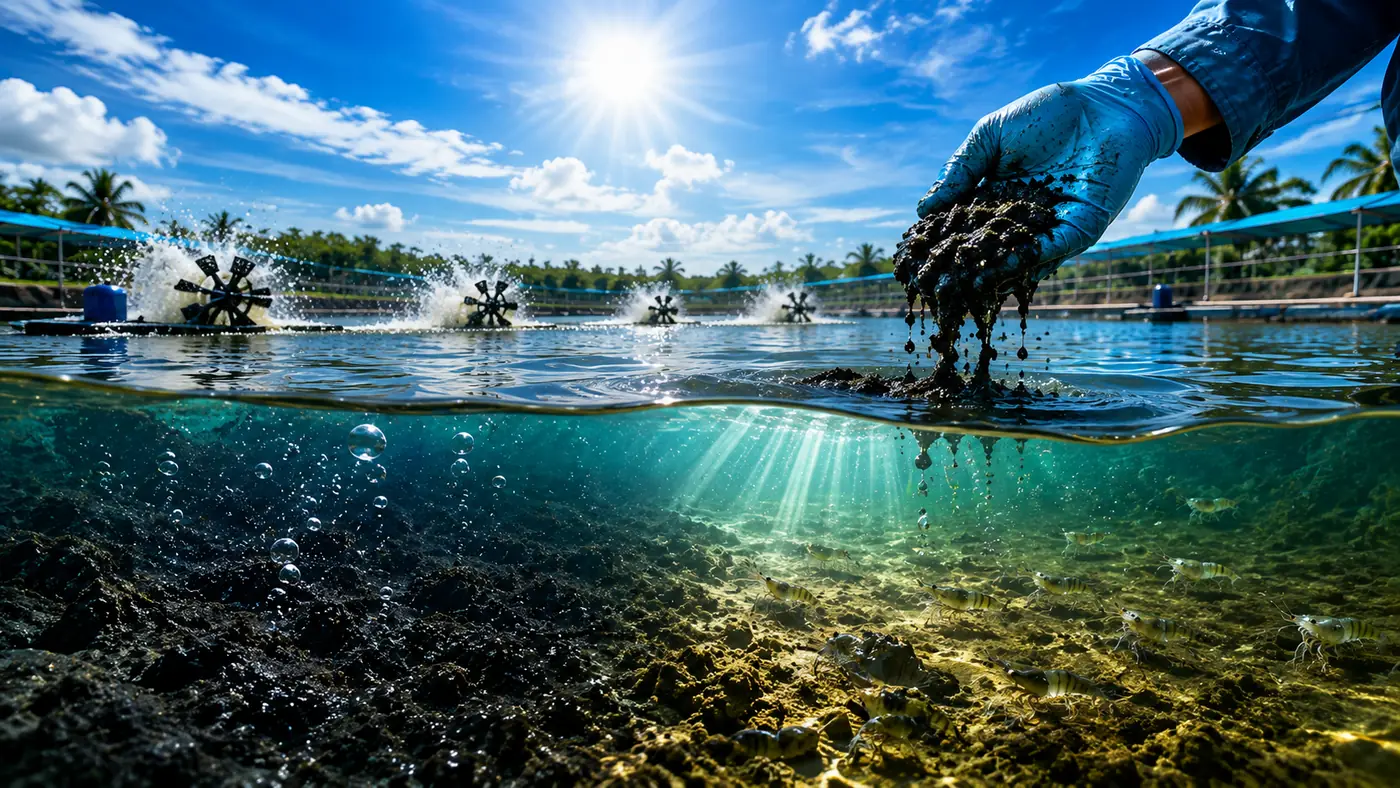
- Pond bottom soil acts as the primary chemical and biological reactor of the aquaculture ecosystem; over 80% of shrimp mortality and metabolic stress originates at the benthic sediment-water interface.
- Black sludge develops when unconsumed feed, faeces, and dead plankton accumulate beyond the oxygen diffusion rate of water, forcing anaerobic bacteria to reduce sulfate (SO4^2-) into lethal hydrogen sulfide (H2S).
- Benthic Redox Potential (Eh) must remain above -100 mV; values dropping below -200 mV indicate extreme reducing conditions where toxic un-ionized H2S and ferrous iron (Fe2+) migrate into the shrimp living zone.
- Pre-stocking benthic preparation requires thorough desiccation until 2.5 to 3.0 cm soil cracks form, followed by disc harrowing to 15–20 cm to re-oxidize trapped sulfides and mineralize organic carbon.
- Liming materials must be precisely selected based on soil pH: Agricultural Limestone (CaCO3) for sustainable alkaline buffering, Dolomite for magnesium/calcium balance, and Quicklime (CaO) strictly for pre-stocking pathogen sterilization.
- In-culture bioremediation combining bottom-dwelling Bacillus consortia, photosynthetic bacteria (Rhodobacter), and hydrodynamic aeration sweeps digests organic sludge without disturbing pond balance.
Field Case Study: 10-Acre Intensive Shrimp Farm Benthic Reclamation
A 10-acre commercial farm in Bapatla suffered chronic loose-shell syndrome and mid-cycle mortality at 65 DOC due to 12cm accumulated black anaerobic sludge, low soil pH (5.9), and benthic redox crashing to -260 mV. By executing a dual-action protocol combining agricultural limestone broadcast (1,200 kg/ha) with high-potency Bacillus subtilis & Paracoccus bioremediation and synchronized aeration sweeps, benthic redox recovered to -45 mV, black sludge was reduced by 82%, and the farm completed the crop at 31-count with an FCR of 1.26.
1. The Anatomy of Pond Bottom Chemistry & Sediment-Water Interface
In commercial penaeid shrimp culture (Litopenaeus vannamei and Penaeus monodon), shrimp spend over 90% of their life cycle grazing, resting, and molting in direct contact with the pond floor. Consequently, the benthic soil-water interface serves as the primary biological and chemical reactor governing pond health, pathogen pressure, and animal survival.
Throughout a typical 100 to 120-day grow-out cycle, an intensive shrimp pond stocked at 50 to 80 PL/m² receives between 5,000 and 8,000 kg of commercial pelleted feed per hectare. Biological monitoring studies conducted by ICAR-CIBA indicate that only 25% to 32% of total feed nitrogen and phosphorus is converted into harvested shrimp biomass. The remaining 68% to 75% is excreted as metabolic faeces, dissolved ammonia, and uneaten feed crumbles that settle directly onto the pond bottom.
When this massive organic carbon load settles, it undergoes rapid microbial decomposition. The benthic sediment quickly stratifies into two distinct morphological layers: a micro-thin (1 to 3 mm) aerobic surface film in contact with oxygenated water, and a dense, oxygen-depleted anaerobic sub-surface layer. In the absence of proactive soil management, the anaerobic layer expands upward, consuming benthic dissolved oxygen and suffocating the shrimp grazing zone.
A. The 1–3 mm Oxidized Micro-Layer Dynamics
The uppermost 1 to 3 millimeters of sediment contains oxidized chemical species, including ferric iron (Fe3+), manganese dioxide (Mn4+), and oxidized nitrate (NO3-). This thin oxidized seal acts as an essential biochemical barrier, neutralizing and precipitating toxic gases that attempt to diffuse upward from the deeper anoxic sediment into the water column.
Maintaining this oxidized surface film requires a continuous dissolved oxygen (DO) concentration of at least 3.5 to 4.0 mg/L in the water layer immediately adjacent (5 cm) to the sediment floor. If benthic water DO drops below 2.0 mg/L for more than 4 consecutive hours, this oxidized seal dissolves, exposing the culture environment to lethal reducing compounds.
B. Organic Sediment Accumulation Budget
For every 1,000 kg of shrimp harvested, approximately 350 to 500 kg of dry organic matter accumulates on the pond floor. This organic sludge consists of 40% crude protein, 15% polysaccharides, 8% lipids, and dead diatom/cyanobacterial cell walls.
As this organic blanket thickens, microbial heterotrophic respiration consumes oxygen faster than water diffusion can replenish it. The sediment rapidly undergoes a phase shift into extreme chemical reduction, generating noxious black sludge characterized by foul odors and dark iron sulfide precipitates.
Use a transparent acrylic core sampler (50 mm diameter) twice monthly to inspect sediment stratification. If the light-brown oxidized surface layer is thinner than 1.5 mm, benthic dissolved oxygen is critically deficient and dangerous anaerobic sulfide production is already underway.
2. Redox Potential (Eh) & Anaerobic Reduction Pathways (H2S, NH3, NO2-)
Oxidation-Reduction Potential (ORP), denoted as Eh and measured in millivolts (mV), is the definitive scientific indicator of chemical energy and electron availability in pond sediment. In well-oxygenated water, Eh values range between +350 mV and +500 mV. As oxygen is depleted by microbial decomposition, obligate and facultative anaerobic bacteria sequentially utilize alternative terminal electron acceptors.
The thermodynamic sequence of electron acceptor consumption proceeds in a strict hierarchical order: Oxygen (O2) -> Nitrate (NO3-) -> Manganese (Mn4+) -> Iron (Fe3+) -> Sulfate (SO4^2-) -> Carbon Dioxide (CO2). When sediment Eh drops below -150 mV, sulfate-reducing bacteria (predominantly Desulfovibrio and Desulfotomaculum) activate, reducing abundant marine sulfate (SO4^2-) into highly lethal hydrogen sulfide (H2S).
Understanding the relationship between sediment Eh, bottom soil pH, and temperature allows farm managers to preempt toxic gas eruptions before clinical signs of shrimp mortality appear.
A. The Sulfate Reduction Cascade & Un-Ionized H2S Toxicity
Hydrogen sulfide exists in water in a chemical equilibrium between un-ionized H2S gas and hydrosulfide ions (HS-): H2S <-> H+ + HS-. Only the un-ionized H2S form is lipid-soluble and capable of rapidly diffusing across shrimp gill membranes.
Once absorbed, un-ionized H2S binds irreversibly to copper and iron atoms in cytochrome c oxidase enzymes within shrimp mitochondria, completely arresting cellular aerobic respiration. A benthic un-ionized H2S concentration of just 0.01 mg/L induces severe stress and feed cessation, while concentrations exceeding 0.03 mg/L cause acute mass mortality within 4 to 6 hours.
Soil and bottom water pH exert a decisive influence on this equilibrium. At pH 8.0, only 8% of total sulfide exists as toxic H2S. However, if bottom water pH drops to 6.8 due to organic acid accumulation, the proportion of toxic un-ionized H2S skyrockets to over 50%, transforming a manageable sulfide level into a lethal toxic wave.
B. Iron Sulfide (FeS) Precipitation and Black Sludge Formation
When Eh plunges below -100 mV, insoluble ferric iron (Fe3+) is reduced to soluble ferrous iron (Fe2+). This ferrous iron reacts instantaneously with sulfide ions (S^2-) to form black, insoluble ferrous sulfide (FeS): Fe2+ + S^2- -> FeS.
This chemical precipitate gives anaerobic pond sludge its characteristic jet-black appearance and foul rotten-egg stench. While FeS itself is temporarily insoluble, any sudden agitation by aerators or cast nets in low-pH water re-solubilizes FeS, releasing pulses of deadly H2S directly into the water column.
| Redox Potential (Eh) | Zone Classification | Primary Electron Acceptor | Biochemical Reaction & Byproduct | Pond Impact & Toxicity Level |
|---|---|---|---|---|
| > +300 mV | Fully Oxidized (Aerobic) | Dissolved Oxygen (O2) | O2 + 4H+ + 4e- -> 2H2O | Optimal healthy benthic state; active shrimp grazing; zero toxic gases |
| +100 to +300 mV | Mildly Oxidized | Nitrate (NO3-) | 2NO3- -> 2NO2- -> N2 gas (Denitrification) | Stable; safe for benthic fauna; zero H2S accumulation |
| -100 to +100 mV | Moderate Reduction | Manganese (Mn4+) & Iron (Fe3+) | Fe3+ + e- -> Fe2+ (Ferrous iron solubilization) | Soil turns grayish; iron phosphate bonds break; phosphate released |
| -200 to -100 mV | Severe Reduction (Anoxic) | Sulfate (SO4^2-) | SO4^2- + 8H+ + 8e- -> S^2- + 4H2O -> H2S | High Risk: Black sludge (FeS) formation; shrimp show gut irritation & loose shell |
| < -200 mV | Extreme Reduction (Methanogenic) | Carbon Dioxide (CO2) / H+ | CO2 + 8H+ + 8e- -> CH4 (Methane) + 2H2O | Lethal: Total benthic collapse; acute shrimp mortality and emergency harvest required |
Sediment redox potential must be maintained strictly above -100 mV throughout the culture cycle. If an ORP probe reveals values below -150 mV, immediately increase mechanical aeration duration, reduce daily feeding rations by 25%, and broadcast calcium peroxide (CaO2) @ 25 kg/ha over black spots to deliver localized oxygen directly to the sediment matrix.
3. Pre-Stocking Benthic Reclamation: Drying, Cracking & Tilling SOP
The inter-crop fallow period provides the single most critical opportunity to recondition and chemically reset pond bottom soils. During this 2 to 4-week window, atmospheric oxygen can penetrate deep into compacted earth, oxidizing toxic reduced sulfur and iron compounds back into stable, harmless oxidized minerals.
Pond soil reclamation must follow a structured scientific protocol consisting of systematic drainage, sun-drying desiccation, mechanical scraping of central sludge, disc harrowing, and precision liming calibration.
A. Sun Drying & The 2.5 to 3.0 cm Soil Cracking Rule
Following final harvest drainage, the pond bed must be exposed to direct sunlight until the upper 5 to 10 cm of sediment desiccates thoroughly. Drying is considered complete when surface soil cracks reach a width of 2.5 to 3.0 cm and can support the weight of an adult human without sinking more than 1 cm.
This intensive drying process draws atmospheric oxygen deep into soil pores. Ferrous sulfide (FeS) is oxidized into ferric sulfate (Fe2(SO4)3) and iron oxides (Fe2O3), eliminating the reservoir of reactive sulfides. Furthermore, desiccation destroys resting stages of viral vectors (WSSV, IHHNV), microsporidian spores (Enterocytozoon hepatopenaei - EHP), and parasitic protozoans.
B. Mechanical Harrowing, Tilling & Acid Sulfate Soil (ASS) Precautions
Once dried, the pond bottom should be disc-plowed or tilled to a depth of 15 to 20 cm. Tilling breaks up compacted clay pans, mixes alkaline lime into deeper soil layers, and exposes buried organic matter to solar ultraviolet rays and atmospheric oxygen.
CRITICAL CAUTION FOR ACID SULFATE SOILS (ASS): In coastal mangrove soils rich in pyrite (iron disulfide, FeS2), excessive deep tilling is hazardous. When pyrite is exposed to air, it oxidizes to form sulfuric acid (H2SO4), driving soil pH down to extreme levels (pH 3.0 to 4.0) and leaching toxic aluminum (Al3+) and iron into future pond water. In verified Acid Sulfate soils, farmers must practice shallow tilling (5 cm max) combined with repeated tidal washing and heavy dolomitic buffering.
C. Physical Sludge Scraping and Disposal Biosecurity
In intensive earthen ponds, accumulated black muck concentrated within the central 20% to 30% vortex zone must be physically removed using tractor scrapers, front-end loaders, or manual labor.
Excavated sludge contains millions of pathogenic Vibrio colonies, organic toxins, and viral residues. It must never be dumped onto pond dykes or into incoming irrigation canals. Sludge must be transported to dedicated inland containment pits located at least 50 meters away from the aquaculture water circuit and treated with Quicklime (CaO) @ 1.5 kg/m².
Never rush the pond drying phase. Every additional 3 days of sun drying on a cracked pond bed oxidizes more organic carbon and reduces total heterotrophic Vibrio counts by up to 99.4% compared to chemical disinfection alone.
4. Precision Liming Engineering: Selecting & Dosing CaCO3, Ca(OH)2, CaO & Dolomite
Liming is the cornerstone of soil fertility and water chemistry management in aquaculture. Proper liming neutralizes soil acidity, provides essential calcium and magnesium divalent cations for shrimp exoskeleton mineralization, accelerates microbial organic matter decomposition, and builds carbonate-bicarbonate alkalinity reserves to stabilize diurnal pH swings.
However, applying the wrong liming compound or calculating incorrect dosages can lead to severe crop failure. Farm managers must understand the chemical differences between Agricultural Limestone (CaCO3), Dolomite (CaMg(CO3)2), Hydrated Lime (Ca(OH)2), and Quicklime (CaO).
A. Chemical Profiles & Neutralizing Values (NV)
Pure Calcium Carbonate (CaCO3) serves as the international baseline with a Neutralizing Value (NV) of 100%. Quicklime (Calcium Oxide, CaO) has an NV of 179%, meaning 56 kg of CaO neutralizes the same amount of soil acid as 100 kg of CaCO3.
Hydrated Lime (Calcium Hydroxide, Ca(OH)2) has an NV of 136%. Because CaO and Ca(OH)2 release hydroxide ions (OH-) rapidly upon dissolution, they cause instantaneous pH surges exceeding 11.0. Therefore, CaO and Ca(OH)2 must STRICTLY be applied to empty, dry pond beds for pathogen eradication and never broadcast into stocked waters.
Agricultural Limestone (CaCO3) and Dolomitic Limestone (CaMg(CO3)2) dissolve slowly, buffering water and soil safely between pH 7.8 and 8.4 without the risk of chemical shock, making them ideal for both pond preparation and active culture maintenance.
B. Soil Lime Requirement Matrix Based on 1:2.5 pH Test
Lime requirements must always be determined using a standardized 1:2.5 soil-to-distilled-water slurry test rather than water pH alone. Sandy clay and heavy clay soils possess high cation exchange capacity (CEC) and require significantly higher lime doses to neutralize reserve acidity than sandy loam soils.
For soil pH < 5.0 (Extremely Acidic): Broadcast 2,500 to 3,500 kg/ha Agricultural Limestone (CaCO3) or 2,000 kg/ha Dolomite.
For soil pH 5.0 to 6.0 (Moderately Acidic): Broadcast 1,500 to 2,500 kg/ha Agricultural Limestone.
For soil pH 6.0 to 7.0 (Slightly Acidic): Broadcast 1,000 to 1,500 kg/ha Agricultural Limestone.
For soil pH > 7.0 (Neutral/Alkaline): Broadcast 300 to 500 kg/ha Dolomite purely for magnesium/calcium mineral balancing.
| Liming Compound | Chemical Formula | Neutralizing Value (NV) | Primary Application Window | Recommended Dosage Range |
|---|---|---|---|---|
| Agricultural Limestone | CaCO3 | 100% (Standard) | Pond bed preparation & daily growout buffering | 800 – 2,500 kg/ha (Soil pH dependent) |
| Dolomitic Limestone | CaMg(CO3)2 | 108% | Growout mineral balancing (Ca:Mg ratio in low salinity) | 1,000 – 2,000 kg/ha |
| Hydrated Lime (Slaked) | Ca(OH)2 | 136% | Dry pond bed disinfection & acidic pond bund treatment | 300 – 600 kg/ha (Dry Ponds Only) |
| Quicklime (Burnt Lime) | CaO | 179% | Intensive dry bed pathogen eradication & EHP spore kill | 500 – 1,200 kg/ha (Empty Ponds Only) |
| Gypsum (Calcium Sulfate) | CaSO4·2H2O | 0% (Non-neutralizing) | Boosting calcium hardness in high-pH alkaline soils | 500 – 1,000 kg/ha |
Broadcast agricultural lime uniformly when the tilled soil has 20% to 30% moisture (damp to the touch). Applying limestone onto bone-dry soil dust prevents ionic dissociation and causes up to 50% of the lime to blow away or remain unreacted when the pond is filled with water.
5. In-Culture Bioremediation: Probiotics & Sludge Digestion
Once the pond is filled and postlarvae are stocked, mechanical excavation and deep tilling are no longer possible. Throughout the subsequent 90 to 120 days of culture, managing the accumulating organic blanket requires targeted microbiological bio-augmentation (soil probiotics).
Modern soil bioremediation relies on multi-strain bacterial consortia engineered to colonize the sediment-water interface, secrete hydrolytic enzymes, and outcompete opportunistic pathogens like Vibrio parahaemolyticus and Vibrio harveyi.
A. Multi-Strain Bacillus Consortia and Enzymatic Digestion
Endospore-forming Bacillus species (Bacillus subtilis, Bacillus licheniformis, Bacillus pumilus, and Bacillus megaterium) are the workhorses of benthic bioremediation. These aerobic and facultative anaerobic heterotrophs secrete powerful extracellular enzymes:
1. Alkaline Proteases: Hydrolyze unconsumed feed proteins and shrimp faecal polymers into soluble amino acids.
2. Amylases and Cellulases: Break down complex carbohydrate binders and algal cellulose walls.
3. Lipases: Degrade dietary lipids and fatty acid residues that form oily surface scums and anaerobic bottom layers.
By accelerating the breakdown of organic polymers into dissolved carbon and nitrogen, Bacillus prevents the physical accumulation of black sludge and maintains positive sediment redox potential.
B. Photosynthetic Purple Non-Sulfur Bacteria (Rhodobacter sphaeroides)
Photosynthetic purple non-sulfur bacteria (PNSB), notably Rhodobacter sphaeroides and Rhodopseudomonas palustris, possess a unique metabolic capacity to utilize toxic hydrogen sulfide (H2S) as an electron donor under both aerobic and micro-aerobic conditions.
These specialized bacteria oxidize lethal un-ionized H2S into non-toxic elemental sulfur (S0) and sulfate (SO4^2-), effectively neutralizing bottom toxic gas emissions without consuming dissolved oxygen. Dosing PNSB @ 5 to 10 L/ha weekly starting from DOC 40 provides a powerful biological safety net against sudden H2S spikes.
C. On-Farm Probiotic Activation & Fermentation SOP
To maximize enzymatic activity, commercial Bacillus dry spore powders should be pre-activated on-farm prior to application. Mix 500g of pure Bacillus spore formulation with 2.0 kg of sterilized sugarcane molasses and 50 liters of clean, aerated pond water.
Aerate the mixture vigorously for 12 to 16 hours. During this phase, dormant bacterial endospores germinate into metabolically active vegetative cells. Broadcast the activated broth across the pond during mid-morning (9:00 AM to 11:00 AM) with all paddlewheel aerators running to ensure deep benthic distribution.
Never apply chemical disinfectants (BKC, Chlorine dioxide, Iodine) within 72 hours of dosing soil probiotics. Chemical sanitizers non-selectively wipe out both pathogenic Vibrio and beneficial Bacillus colonies, resetting the benthic ecosystem to zero.
6. Aeration Hydrodynamics & Sludge Cone Vortex Management
Water circulation engineering is inextricably linked to pond bottom soil chemistry. Strategically positioned paddlewheel aerators do not merely oxygenate the water column; they generate toroidal hydrodynamic currents that physically scour the pond bottom, keeping the shrimp feeding perimeter clean and transporting settled organic waste into a consolidated central sludge cone.
In an improperly aerated pond, dead zones develop in corners and mid-lengths where water velocity drops below 5 cm/s. In these stagnant pockets, organic sludge accumulates rapidly, forming localized toxic anaerobic black spots.
A. Paddlewheel Vectoring & Tangential Current Velocities
To establish an effective central vortex, paddlewheel aerators must be positioned in a circular arrangement along the outer third of the pond perimeter. Aerator shafts should be angled between 30 and 45 degrees relative to the dyke wall to direct water velocity in a single, coordinated circular rotation.
Target water velocity across the outer 60% of the pond (the feeding zone) should range between 15 and 20 cm/s. This speed is sufficient to suspend light organic faeces and leftover feed without eroding earthen clay embankments.
B. Central Sludge Pit & Siphon Drainage Architecture
In intensive lined and earthen ponds, constructing a concrete central drainage sump (typically 3m x 3m x 1m deep) connected to an external sluice gate or sub-surface discharge pipe is mandatory.
During peak crop biomass (DOC 60 to harvest), the central drain valve should be opened for 5 to 10 minutes every morning before the first feed. This simple daily flush purges up to 200 kg of concentrated black anaerobic sludge from the bottom vortex without causing water level instability.
Operate long-arm paddlewheels continuously for at least 60 minutes prior to cast net checktray inspections. This ensures feeding zones are completely clear of suspended sediment, allowing accurate visual verification of shrimp gut fullness and feed consumption.
7. Standard Operating Procedure (SOP) for Soil Core Sampling & Field Testing
Accurate diagnostic monitoring is the foundation of scientific soil chemistry management. Every commercial farm should equip its technical laboratory with a soil core sampler, a calibrated digital pH/ORP meter with platinum electrode, and hydrogen sulfide chemical test strips.
A. 9-Point Grid Sampling Protocol
Before pond preparation and at DOC 30, 60, and 90, collect soil core samples from 9 designated grid points across each pond: 4 pond corners (10 meters from dyke), 4 feeding line positions, and 1 central sludge vortex point.
Use a 50 mm diameter PVC or acrylic coring tube inserted 15 cm deep into the sediment. Carefully extract the core and immediately inspect the color profile, sediment texture, and depth of the brown oxidized surface layer.
B. Standardized 1:2.5 Slurry Soil pH Measurement
1. Air-dry 50 grams of soil sample in a shaded, well-ventilated area away from direct sunlight (never oven-dry at high temperatures).
2. Pulverize the dried soil using a mortar and pestle and pass it through a 2.0 mm mesh sieve to remove large gravel and shell fragments.
3. Weigh exactly 20.0 grams of sieved soil into a clean 100 mL glass beaker. Add 50.0 mL of deionized or distilled water (1:2.5 weight-to-volume ratio).
4. Stir the slurry vigorously for 5 minutes using a magnetic stirrer or glass rod, then let it stand undisturbed for 30 minutes to allow suspended clay particles to settle.
5. Calibrate a digital pH electrode using fresh pH 4.01, 7.00, and 10.01 standard buffers. Insert the electrode into the settled supernatant liquid and record the stabilized pH value to two decimal places.
C. Benthic Redox Potential (Eh) Field Measurement
To measure true in-situ redox potential without atmospheric oxygen interference, insert a platinum-tipped combination ORP electrode directly into the freshly extracted, wet soil core at 2 cm depth intervals.
Allow 3 to 5 minutes for the millivolt reading to stabilize on the digital meter. Record the reading directly in millivolts (mV). Any reading falling below -100 mV warrants immediate probiotic dosing and aeration vector adjustment.
Maintain a dedicated digital soil logbook tracking monthly pH and Eh readings across all 9 grid points. Plotting soil chemistry trends over multiple cycles reveals chronic pond bottom compaction and guides long-term agricultural liming schedules.
Summary Operational Action Checklist
Frequently Asked Questions
Q: What is the difference between pond water pH and pond bottom soil pH?
Pond water pH reflects the instantaneous balance of dissolved carbon dioxide, carbonate, and bicarbonate ions influenced by photosynthetic phytoplankton activity. In contrast, soil pH reflects the accumulated reserve acidity and exchangeable aluminum/hydrogen ions bound within the clay-mineral matrix. It is very common for pond surface water to measure an alkaline pH of 8.2 while the bottom soil underneath tests at a severely acidic pH of 5.8, which stunts benthic grazing and promotes pathogen proliferation.
Q: How does un-ionized Hydrogen Sulfide (H2S) kill shrimp, and what is the maximum safe limit?
Un-ionized Hydrogen Sulfide (H2S) is a fast-acting metabolic poison that binds irreversibly to cytochrome c oxidase enzymes in shrimp mitochondria, completely blocking cellular respiration and oxygen transport across gill lamellae. A benthic concentration as low as 0.01 mg/L causes severe lethargy, gut emptying, and immune suppression, while concentrations above 0.03 mg/L cause acute mass mortality within hours. Furthermore, lower water pH (< 7.5) drastically increases the proportion of toxic un-ionized H2S relative to non-toxic HS- ions.
Q: Why should Quicklime (CaO) or Hydrated Lime (Ca(OH)2) never be applied to a stocked aquaculture pond?
Quicklime (CaO) and Hydrated Lime (Ca(OH)2) release massive concentrations of hydroxide ions (OH-) upon dissolution, triggering an immediate and catastrophic spike in water pH beyond 10.5–11.0, accompanied by a sharp exothermic heat release. This extreme pH surge destroys the delicate branchial gill tissue of shrimp, strips their external protective mucus layer, and converts non-toxic ammonium (NH4+) instantaneously into lethal un-ionized ammonia gas (NH3), wiping out the crop within minutes. Quicklime should strictly be reserved for empty, dry pond bottoms during pre-stocking preparation.
Q: Can commercial soil probiotics completely replace physical pond drying and desilting?
No. While high-potency Bacillus and photosynthetic probiotics are indispensable for mineralizing daily organic waste during the 90–130 days of active culture, they cannot fully eliminate heavy accumulation of compacted mineral silt, dead algae, and recalcitrant lignocellulosic sludge across consecutive crops. Thorough post-harvest sun drying, soil cracking to 2.5–3.0 cm, and physical sediment excavation of the central sludge pit remain non-negotiable foundations for sustainable biosecurity.
AquaSangham Technical Advisory
Soil & Water Chemistry Division
Contributing Senior Technical Writer & Aqua Consultant at AquaSangham.
Recommended Farming Guides
Western Blue Shrimp (Penaeus stylirostris) Intensive Culture: Lessons from New Caledonia
Read Article →Farming TechGreen Tiger Prawn (Penaeus semisulcatus) Culture Protocols for Gulf of Mannar Coastal Ponds
Read Article →Farming TechKuruma Prawn (Penaeus japonicus) Culture in Sandy Substrates: High-Value Export SOP
Read Article →Get Live Farm Advice on AquaSangham Mobile App
Download India's #1 Aquaculture Super App for real-time market prices, precision tools, and community advice.
Download Free Android App